Showing posts with label rating. Show all posts

A Positive Life-affirming Story That is Engaging

Deepika Padukone in a still from Chhapaak.

Deepika Padukone in a still from Chhapaak.

Deepika Padukone blends into Malti seamlessly, the star, rarely surfacing and director Meghna Gulzar constructs the balance with a seasoned hand. Read our full review of ‘Chhapaak’ below.

  • News18.com
  • Last Updated: January 10, 2020, 7:41 AM IST

Chhapaak

Cast: Deepika Padukone, Vikrant Massey

Director: Meghna Gulzar

Chhapaak’s first scene is that of a swelling crowd of students protesting against a brutal incident of rape (obviously referencing the protests that broke out in support of Nirbhaya) as the police try to contain them. That scene although a brief one cleverly establishes the preamble for what’s to follow–a background to the legal and systemic problems that come in the way of women’s safety in India.

Director Meghna Gulzar displays a mastery over her craft by approaching the subject with the maturity and sensitivity that it deserves. Based on the life of acid attack survivor Laxmi Agarwal, the narrative is shorn of false bravado, the scenes never swelling to larger than life proportions, a common trope in popular cinema. Laxmi Agarwal had acid thrown on her face in 2005 by her acquaintances Guddu and Rakhi for Laxmi’s refusal to marry Guddu.

The protagonist in the film, however, is rechristened Malti and other character names have been changed as well but the story remains a faithful rendition of the real-life incidents. One is shocked into attentiveness on seeing Malti screaming in agony, as she falls to the ground after the attack. And then scene after scene, we see her face melt away only to be replaced by a vision of flesh singed and mauled beyond repair and recognition. That particular moment when Malti sees her dismembered face for the first time in the mirror and shrieks in horror is telling. It is only after 7 surgeries involving skin grafts that her life is restored to a semblance of normalcy. Frankly, Malti’s ‘new normal’ is harsh. However, what makes Malti’s (Laxmi’s) story truly heroic is not the fact that she bounces back from the tragedy but that she lends her voice to protect others from this heinous crime.

Gulzar’s Malti is not a mere survivor; she’s a crusader.

Atika Chohan and Meghna Gulzar’s screenplay and dialogues written with great care seldom allow the film to degenerate into a melodrama. The spotlight remains firmly on Malti’s trial and tribulations following the acid attack. For instance, the fact that a long drawn trial sucks up most of her family’s resources or that she struggles to find a job remains central to the story instead of a burgeoning romance.

Deepika Padukone blends into Malti seamlessly, the star, rarely surfacing and Gulzar constructs the balance with a seasoned hand. After Padmaavat, she delivers yet another striking performance in a very difficult role. There is Vikrant Massey as Amol, brilliant, even in a small, supporting part and Madhurjeet Sarghi as the lawyer who walks every step of the way with Malti in her fight for justice. While none of them get to deliver the tried and tested monologue, there are delicate flourishes that make them effective.

The weak link if any, is an attempt to marry a breezy narrative style with the starkness of a procedural. On occasions, it proves to be distracting. Keeping the minor foibles aside, Chhapaak deserves to be lauded for what it is—a positive life-affirming story that engages and sensitizes in equal measure. That actress Kangana Ranaut, whose sister Rangoli Chandel suffered a similar attack has gone on record to praise the director and the actor for making Chhapaak, besides Chandel sharing a few details of the incident on social media, suggest that the film is certain to strike a chord. It is truly laudable for putting forward the victims’ perspective while sensitizing others about the magnitude of the crime and its destructive aftermath.

Loosely translated, Chhapaak means ‘splash’ and the film with its powerful message is likely to make a splash too. Take a bow, ladies.

Rating: 3.5/5

Follow @News18Movies for more


https://pubstack.nw18.com/pubsync/fallback/api/videos/recommended?source=n18english&channels=5d95e6c378c2f2492e2148a2&categories=5d95e6d7340a9e4981b2e109&query=Chhapaak,Movie,Review:,A,Positive,Life-affirming,Story,That,is,Engaging,Chhapaak,Deepika,Padukone,&publish_min=2020-06-04T07:41:43.000Z&publish_max=2020-06-06T07:41:43.000Z&sort_by=date-relevance&order_by=0&limit=2

Source

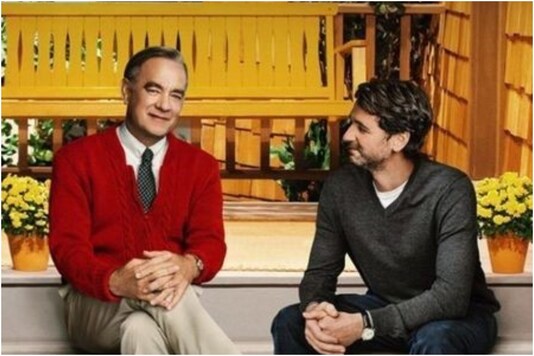
Even the Cynics are Charmed by Tom Hanks

A Beautiful Day in the Neighborhood Movie Review: Even the Cynics are Charmed by Tom Hanks

A Beautiful Day in the Neighborhood Movie Review: The movie is among those rare films of post-truth era that makes you believe that good people do exist– even among television hosts.

  • News18.com
  • Last Updated: January 17, 2020, 11:27 AM IST

A Beautiful Day in the Neighbourhood

Cast: Tom Hanks, Matthew Rhys, Chris Cooper

Director: Marielle Heller

A Beautiful Day in the Neighbourhood is a ‘biopic’ of sorts if one were to go with our colloquial film parlance. Starring Tom Hanks, this film is about a journalist’s life-altering interview with Mr Rogers, a beloved children’s-TV show host. Director Marielle Heller blurs the lines between childhood and adulthood with such remarkable storytelling that it seems nothing short of genius. It is a delightful doffing of the hat to the legacy of kindness.

In the opening shots when you see Tom Hanks as Mr Rogers doing the signature pottering about on the set of his long-running show, changing into his bright red cardigan and blue shoes, it almost appears to be a children’s movie. Before you know it, you are suddenly whizzing down the rabbithole making one startling emotionally-charged discovery after another.

Loosely based on the real-life story of Fred Rogers, host of the popular children’s tv show in America, titled Mr. Rogers’ Neighborhood and his serendipitous interview with journalist Tom Junod for Esquire, the film does surprise you with the deeper more adult father-son story at the heart of it. Given that Tom Junod’s character is a part-fictional Lloyd Vogel (Matthew Rhys) in the film, it allows a fancier flight of imagination. If Rogers was as good as gold then the part-fictional construct that is Vogel helps the story and its dramatis personae.

The writers do a tremendous job of making a straight as an arrow celebrity who delights in being ordinary, come alive on-screen. Small touches like Rogers showing himself struggle when putting up a camping tent and retaining it in the show to make children understand that things don’t always go smoothly in life, make a larger comment on the phenomenon that Rogers was.

A television presenter who despite not following the TV rulebook went on to create television history is certainly a story worthy of being retold but what sets this one apart is that it focuses on him as a medium to help Lloyd Vogel finds his own personal happiness. When Vogel, an investigative journalist assigned to do an interview that he considers a puff-piece first meets Rogers, he is certain that he will be able to dig up some dirt on him. He hunts desperately for the human frailty that will expose Rogers’ sham of being the kindest human being. As it turns out, Vogel’s pursuit and his interactions with Rogers does bring out the host’s more humane side but more significantly, reveals the scribe’s own inner demons.

This emotional play-off between Rogers and Lloyd Vogel makes the film a deeply emotional one and certainly very watchable. It is sort of befitting that Tom Hanks with his indisputable good guy halo plays Rogers. His honest-to-goodness demeanour and earnestness bodes well for the on-screen persona making the character immensely believable. Matthew Rhys’ cynical play of Vogel is the perfect foil to Hanks’ Rogers. In fact, in a clever departure from biopic formulas, this one makes Vogel the central character instead of keeping Rogers at the forefront at all times!

Director Heller’s frequent intercuts between the real world and the make-believe neighborhood with its puppets and toy blocks lends a surreal touch to the film. It feels as though one is witnessing the grown-up protagonists in the story go back to being children under Rogers’ reassuring spell. And while they do snap back to reality, the magic of Rogers’ untainted legacy of kindness leaves you with a warm fuzzy feeling in your heart.

A Beautiful Day in the Neighborhood is among those rare films of post-truth era that makes you believe that good people do exist– even among television hosts.

Rating: 3.5/5

Follow @News18Movies for more


https://pubstack.nw18.com/pubsync/fallback/api/videos/recommended?source=n18english&channels=5d95e6c378c2f2492e2148a2&categories=5d95e6d7340a9e4981b2e109&query=A,Beautiful,Day,in,the,Neighborhood,Movie,Review:,Even,the,Cynics,are,Charmed,by,Tom,Hanks,a,beautiful,day,in,neighborhood,a,beautiful,day,in,neighborhood,cast,&publish_min=2020-06-04T04:34:26.000Z&publish_max=2020-06-06T04:34:26.000Z&sort_by=date-relevance&order_by=0&limit=2

Next Story


Source

Kangana Ranaut's Charming Film Fills You with Hope and Warmth

Panga

Cast: Kangana Ranaut, Jassie Gill, Richa Chada, Neena Gupta, Yagya Bhasin

Director: Ashwiny Iyer Tiwari

Panga, which is titled after the Hindi word for seeking out a confrontation, opens with a scene that – if this were real life and not a film – might have led to exactly that. In the middle of the night a woman kicks her husband repeatedly in her sleep. Her good-natured mister makes a throwaway joke the next morning, and quietly tucks a hot-water bag under his bum at the breakfast table. No arguments, no confrontation. He understands that his wife may have given up kabaddi, but kabaddi isn’t quite out of her system.

On the surface Panga is the inspiring story of a woman who returns to the sport she abandoned in exchange for domestic bliss. You only have to look closer to recognise that it’s actually a charming, feel-good film about unconditional love and the true meaning of family.

Directed by Ashwiny Iyer Tiwari, this thoughtful film asks us to celebrate not only those resilient women who refuse to be restricted by marriage and motherhood in the pursuit of their dreams, but also the supportive husbands and children that are the wind beneath their wings.

32-year-old Jaya Nigam once a national level athlete, seems content with an adoring husband, a cheeky but affectionate son, and a job as a ticket clerk at Bhopal Railway Station. Aside from the nightly ‘kicking’ ritual, and the occasional nostalgia, kabaddi seems firmly in her past as she commits her energies to home and hearth.

Kangana Ranaut is extraordinary as Jaya. There isn’t one false note in her beautiful, lived-in portrayal of a selfless wife and mother. She loves her family more than anything, but knowing that she could have achieved more haunts her ever so often, and Kangana conveys that feeling astutely, mostly without words. When Jaya’s seven-year-old son Adi learns about the sacrifice she made for their family he recruits his father’s help in convincing her to attempt a comeback. Overcoming her initial reluctance Jaya throws herself into the challenge.

Above everything else the writing in Panga is powered by humour and positivity. This is an endlessly optimistic film with generally kind-spirited characters that enable and empower Jaya to pursue her goal and to realise her potential. Her greatest cheerleader is her husband Prashant, played by an impossibly charming Jassie Gill, who encourages her to fly, steps up to shoulder her domestic duties, and does it all with a smile. Prashant is the partner every Indian woman dreams of, and the partner every Indian man will be measured against henceforth.

Her other allies include her precious son Adi, played by Yagya Bhasin, who gets some of the best lines and walks away with every scene that he’s in. Richa Chadha is terrific as Jaya’s best friend and old teammate Meenu whose droll humour and tough love yields some of the film’s funniest moments. A scene in which she draws parallels between specific kabaddi moves and responding to a marriage proposal had me in splits.

A word also for the lovely Neena Gupta who, in only a handful of scenes, makes her presence count. I had a lump in my throat watching the scene in which she asks Jaya to make sure she mentions her in interviews.

Director Ashwiny Iyer Tiwari, who has co-written the film with Nikhil Mehrotra and Nitesh Tiwari, creates an entirely believable world – from the rhythms of life in a small town, to the flesh-and-blood characters playing the tiniest roles. Even in its cheery optimism, and the entirely predictable arc of its sports portions, Panga seldom feels contrived. It does feel overlong in its second hour as the screenplay goes through all the usual sporting clichés, rivalries, and underdog tropes. You know exactly how things will pan out.

Having said that, you’re as invested in Jaya’s journey as her family that’s cheering from the stands. This is a result of the mostly smart writing, and a winning performance from the film’s leading lady. Kangana imbues Jaya with both vulnerability and determination. She conveys the guilt that mothers frequently feel over nursing a personal dream, but she also drives home the message that it’s 2020 and we can’t still be debating whether marriage and motherhood must signal a full stop to a woman’s goals.

The film’s big success is in delivering its message without making a big noise about it. Panga is all about its little moments. It’s a film about love disguised as a sports-movie. I’m going with three-and-a-half out of five. It fills you with hope and warmth. We could all do with that in these times.

Rating: 3.5 / 5

Follow @News18Movies for more


https://pubstack.nw18.com/pubsync/fallback/api/videos/recommended?source=n18english&channels=5d95e6c378c2f2492e2148a2&categories=5d95e6d7340a9e4981b2e109&query=Panga,Movie,Review:,Kangana,Ranaut’s,Charming,Film,Fills,You,with,Hope,and,Warmth,Aswiny,Iyer,Tiwari,Jassie,Gill,&publish_min=2020-06-04T03:52:47.000Z&publish_max=2020-06-06T03:52:47.000Z&sort_by=date-relevance&order_by=0&limit=2


Source

Ayushmann Khurrana Delivers Another Winner

Shubh Mangal Zyada Saavdhan

Cast: Ayushmann Khurrana, Jitendra Kumar, Gajraj Rao, Neena Gupta

Director: Hitesh Kewalya

Smack in the middle of Shubh Mangal Zyada Saavdhan, Ayushmann Khurana’s character Kartik says to his boyfriend’s homophobic father that gay people have to fight every day, but there is no fight harder than the one with your family.

There is unmistakable dignity in the way that the same-sex relationship at the centre of this film has been treated. When we meet the flamboyantly filmi Kartik and his boyfriend Aman (Jitendra Kumar), they are already in love and living together in Delhi. It’s just that Aman hasn’t come out to his family back home in Allahabad. Considering the theme, the dialogues are sensitive and the repartee between the characters frequently crackling.

When Aman does open up about his love for Kartik to his scientist father (Gajraj Rao) and his straight-talking mother (Neena Gupta), he talks of dopamine, oxytocin, and of his hypothalamus. Aman explains his feelings in chemical terms, but it nicely captures the sheer splendour of love.

Admirably, writer-director Hitesh Kewalya doesn’t mine laughs from stereotyping gay characters in the way that mainstream Hindi films have done for as long as one can remember. Aside from an innocuous nose-ring that Ayushmann wears, there are no obvious markers of femininity. What’s especially refreshing is that the lovers or their relationship is never the source of comedy, it’s the extreme reactions by those around them to their relationship that is treated with humor. In that, Shubh Mangal Zyada Saavdhan is not so much about homosexuality as it is about homophobia.

But the humour, as it turns out, is hit and miss. 2017’s Shubh Mangal Saavdhaan cleverly and amusingly beefed up the role of the extended family in what was essentially the story of a soon-to-be-married couple and the ‘problem’ they’re confronted with. This film too puts the family centrestage, but that overcomplicates the story. There’s a trying-too-hard quest for laughs that starts wearing thin. Aman’s folks argue incessantly and blame each other while trying to deal with the ‘situation’, until the story feels stretched and silly. The bullying relationship between Gajraj’s character Shankar Tripathi and his brother Chaman (Manu Rishi) is funny initially, but it works strictly as a side act and loses steam when it becomes the film’s main source of drama and laughs.

A portion in which Tripathi stages a religious ‘rebirth’ ceremony to ‘normalise’ his son doesn’t land, and a subplot involving his invention of black cauliflower is a contrived metaphor.

The immensely likeable Gajraj Rao, trapped in a not-so-likeable character, is both one of the film’s strengths and weaknesses. In a very funny scene, Tripathi has a violent physical reaction when he spots his son in a clinch with his lover while the family is heading by train for a wedding. Tripathi is a real hoot when he’s nervous and vulnerable – like in his impromptu dance-off with Kartik – but there is little joy in the bits where he’s the standard-issue villain-dad.

Even the pairing of Gajraj Rao and Neena Gupta as Aman’s parents, inspired no doubt by their wonderful chemistry in Badhaai Ho, is largely underutilised.

There’s a naughty joke snuck in there about how she relieves her husband’s anxiety, but for the most part the bickering gets tiresome. Aman’s chacha and his hysterical chachi, played by Manu Rishi and Sunita Rajwar, are funnier. In one scene, to underplay the PDA that Aman and Kartik indulge in at their daughter’s wedding, the couple comes up with an explanation so far-fetched, it’s hard to hold back the laughs.

It’s interesting that Kewalya uses the classic Dilwale Dulhania Le Jayenge blueprint to stage this story of parental opposition in the face of true love and a couple’s longing for acceptance from the stubborn family. It’s a smart approach to push out the message that gay relationships are the same as straight ones; the conflicts are all too familiar. Shubh Mangal Zyada Saavdhan also ticks the boxes of an ‘Ayushman Khurrana social message movie’. The gay characters are self-respecting men dead against the idea of marrying a woman out of convenience. Parental denial is also addressed head-on, and frowned upon using clap-trap dialogues.

There are many zingers in the film, delivered with flair and timing by Kewalya’s cast. As Kartik, who wears his heart on his sleeve, ready to go to war for love, Ayushmann Khurrana gets the lion’s share of winning one-liners. He plays Kartik as confident and comfortable in his skin, but also a tad hyper. The film is respectful but never shy of depicting affection between its protagonists, and that’s especially worthy of praise in a famously squeamish, homophobic cinema. So many actors – Sanjay Suri in My Brother Nikhil, Manoj Bajpai in Aligarh, Fawad Khan in Kapoor & Sons, Shabana Azmi in Fire, Kalki Koechlin in Margarita with a Straw, and others – paved the way so Ayushmann and Shubh Mangal Zyada Saavdhan could take the baton and run. The film’s ‘normal’ treatment of the gay character, and Ayushmann’s assertive performance is a victory in itself.

But while all the slow-motion entries and exits go to Ayushmann, the film’s secret weapon is Jitendra Kumar whose Everyman portrayal of Aman is one of the film’s big strengths. The actor, who has appeared in many web series including Kota Factory, has a warm, grounded presence that makes the character’s vulnerability all too authentic. Jitendra and Ayushmann have real chemistry; their little moments together bring depth to the film.

Shubh Mangal Zyada Saavdhan isn’t consistent. The script spends too much time focused on the infighting within Aman’s family instead of staying with the leads. Despite that there is enough to enjoy and appreciate here. It takes a difficult subject and executes it with some flair. For that, I’m going with three out of five.

Rating: 3/5

Follow @News18Movies for more


https://pubstack.nw18.com/pubsync/fallback/api/videos/recommended?source=n18english&channels=5d95e6c378c2f2492e2148a2&categories=5d95e6d7340a9e4981b2e109&query=Shubh,Mangal,Zyada,Saavdhan,Movie,Review:,Ayushmann,Khurrana,Delivers,Another,Winner,Ayushmann,Khurrana,Gajraj,Rao,&publish_min=2020-06-04T00:40:10.000Z&publish_max=2020-06-06T00:40:10.000Z&sort_by=date-relevance&order_by=0&limit=2


Source

Taapsee Pannu is First-Rate in Anubhav Sinha's Compelling Film

Thappad

Cast: Taapsee Pannu, Pavail Gulati, Dia Mirza

Director: Anubhav Sinha

Thappad, as the film’s title so unambiguously suggests, is about a slap. A slap that an otherwise amiable, good-natured man lands on his wife’s face in a moment of misdirected anger. In his defense, it is the first time he has raised his hand on her. In his defense, he has just found out that the professional goal he had nurtured, toiled hard for, and achieved, has been unfairly snatched away from him. In his defense, it happened in the heat of the moment. For his wife, no defense can justify the slap. It changes everything. It practically dismantles her life.

In setting up this premise, director Anubhav Sinha, who has co-written the film with Mrunmayee Lagoo Waikul, asks us repeatedly to consider whether Amrita (Taapsee Pannu) should, like everyone around her suggests, let it go and move on. It shouldn’t have happened, but “ab ho gaya na?” her husband Vikram (Pavail Gulati) laments. Her mother-in-law (Tanvi Azmi), with whom she has a loving relationship, says: “Thoda bardaasht karna seekhna chahiye auraton ko.”

Her own mother (Ratna Pathak Shah) is distraught that she is considering divorce. Her brother describes it as “one small episode”, and thinks “it’s silly” that she’s taking it so far. Her neighbor, a widow (Dia Mirza), delivers that ultimate guilt trap: “Rishte banane mein utni effort nahin lagti jitna nibhane mein lagti hai.” Even her lawyer (Maya Sarao) advises her to go back and make it work.

The film, and the slap at the centre of it, is not about domestic violence. It’s about entitlement. It’s about decades of conditioning. It’s about flawed social structures and outdated gender expectations. In Robert Altman-esque fashion, the film opens with a charming sequence in which an orange ice lolly is used as a motif to introduce several characters, before we learn how each fits into the protagonist’s orbit. Patriarchy and entitlement run deep; Amrita is hardly the only victim.

There is the poor domestic help who suffers beatings from her husband routinely. There is the older woman, resentful that her loving husband never encouraged her to pursue her love for singing after marriage. There is the soon-to-be-married young couple, seemingly equal in their relationship until a tense interaction reveals otherwise. There is also the accomplished professional whose husband repeatedly credits her success to his family’s powerful connections.

When Vikram slaps Amrita, every one of these relationships unravels.

Shrewdly the very premise of the film and Amrita’s escalating reaction to the slap is plotted in such a way that you’re frequently compelled to ask: “Isn’t she taking it too far?” or “Surely she doesn’t need to make such a big deal of it?”

The answer to those questions may be found in Vikram’s unmistakably selfish handling of the situation.

But the thing is – and this is key – there are no easy answers here. The husband is no villain. Vikram is selfish, entitled, conditioned to put himself and his own pride before his wife, but he’s not a bad guy. He’s just every other Indian man. Knowing that, you’re confronted with the same question again: “Isn’t she overdoing it?” Don’t be embarrassed if you’re leaning dangerously close to answering yes; it’s exactly the position Sinha wants you to take. In fact, in a scripting masterstroke he raises the stakes at the halfway mark, putting the couple in such a situation that now you’re thinking: “Okay, this is too much. She must let it go.”

But Thappad isn’t a film about a wife teaching her husband not to take her for granted. It’s about a woman rediscovering her sense of self, contemplating what is fair and what isn’t. It’s about no longer disregarding the deep-rooted sexism and selfishness, and the casual insensitivity that women contend with everyday. If any of this sounds like activism or social-message disguised to look like a movie, it’s honestly not. You’re very much invested in Amrita’s story. She is the fulcrum of Vikram’s uppercrust home in Delhi; she’s a supportive wife and a caring daughter-in-law.

In one bristling moment she points out that the sacrifice of every woman who chooses to be a homemaker can be understood from the simple fact that no little girl when asked what she wants to grow up to be says ‘housewife’.

In a film so well-made, minor quibbles stand out. The second hour feels stretched. The estrangement of Vikram and his mother from his uber rich father and brother is confusing. But these are minor quibbles. Sinha pulls off a complex story and extracts remarkable performances from his ensemble, justifying even those in tiny roles like Ram Kapoor and Manav Kaul.

Of the main cast, Maya Sarao brings a sharp edge to the role of Amrita’s conflicted lawyer, and Geetika Vidya Ohlyan is terrific as her garrulous househelp. Dia Mirza is nicely understated as her neighbor, and both Ratna Pathak Shah and Tanvi Azmi are expectedly in fine form. Kumud Mishra stands out as Amrita’s supportive father, hitting all the right notes, and aided by some of the film’s most loaded lines. Pavail Gulati, in the difficult role of the husband, effectively plays him as clueless to his own shortcomings; it’s a competent performance in a nuanced role.

Which brings us to the film’s axis, Taapsee Pannu. In a refreshing change of image, her Amrita is not the fierce, woman-on-the-warpath that she frequently tends to play. She’s a woman torn, she has both strength and fragility; it’s a beautifully realized performance. The script gives her some great moments to shine, and she seizes them. I was a mess by the time Amrita has that honest, wounding conversation with her mother-in-law towards the end of the film.

I’m going with four out of five for Thappad. It’s a hard subject to pull off, but Anubhav Sinha achieves it with first-rate storytelling. The best films inspire dialogue, they set you thinking; they can even lead to change. This one made me uncomfortable; it made me question myself and I think it will make you too. It’s essential viewing.

Rating: 4/5


https://pubstack.nw18.com/pubsync/fallback/api/videos/recommended?source=n18english&channels=5d95e6c378c2f2492e2148a2&categories=5d95e6d7340a9e4981b2e109&query=Thappad,Movie,Review:,Taapsee,Pannu,is,First-Rate,in,Anubhav,Sinha’s,Compelling,Film,Anubhav,Sinha,Dia,Mirza,&publish_min=2020-06-03T22:31:50.000Z&publish_max=2020-06-05T22:31:50.000Z&sort_by=date-relevance&order_by=0&limit=2


Source