Showing posts with label Movie Reviews. Show all posts

A Positive Life-affirming Story That is Engaging

Deepika Padukone in a still from Chhapaak.

Deepika Padukone in a still from Chhapaak.

Deepika Padukone blends into Malti seamlessly, the star, rarely surfacing and director Meghna Gulzar constructs the balance with a seasoned hand. Read our full review of ‘Chhapaak’ below.

  • News18.com
  • Last Updated: January 10, 2020, 7:41 AM IST

Chhapaak

Cast: Deepika Padukone, Vikrant Massey

Director: Meghna Gulzar

Chhapaak’s first scene is that of a swelling crowd of students protesting against a brutal incident of rape (obviously referencing the protests that broke out in support of Nirbhaya) as the police try to contain them. That scene although a brief one cleverly establishes the preamble for what’s to follow–a background to the legal and systemic problems that come in the way of women’s safety in India.

Director Meghna Gulzar displays a mastery over her craft by approaching the subject with the maturity and sensitivity that it deserves. Based on the life of acid attack survivor Laxmi Agarwal, the narrative is shorn of false bravado, the scenes never swelling to larger than life proportions, a common trope in popular cinema. Laxmi Agarwal had acid thrown on her face in 2005 by her acquaintances Guddu and Rakhi for Laxmi’s refusal to marry Guddu.

The protagonist in the film, however, is rechristened Malti and other character names have been changed as well but the story remains a faithful rendition of the real-life incidents. One is shocked into attentiveness on seeing Malti screaming in agony, as she falls to the ground after the attack. And then scene after scene, we see her face melt away only to be replaced by a vision of flesh singed and mauled beyond repair and recognition. That particular moment when Malti sees her dismembered face for the first time in the mirror and shrieks in horror is telling. It is only after 7 surgeries involving skin grafts that her life is restored to a semblance of normalcy. Frankly, Malti’s ‘new normal’ is harsh. However, what makes Malti’s (Laxmi’s) story truly heroic is not the fact that she bounces back from the tragedy but that she lends her voice to protect others from this heinous crime.

Gulzar’s Malti is not a mere survivor; she’s a crusader.

Atika Chohan and Meghna Gulzar’s screenplay and dialogues written with great care seldom allow the film to degenerate into a melodrama. The spotlight remains firmly on Malti’s trial and tribulations following the acid attack. For instance, the fact that a long drawn trial sucks up most of her family’s resources or that she struggles to find a job remains central to the story instead of a burgeoning romance.

Deepika Padukone blends into Malti seamlessly, the star, rarely surfacing and Gulzar constructs the balance with a seasoned hand. After Padmaavat, she delivers yet another striking performance in a very difficult role. There is Vikrant Massey as Amol, brilliant, even in a small, supporting part and Madhurjeet Sarghi as the lawyer who walks every step of the way with Malti in her fight for justice. While none of them get to deliver the tried and tested monologue, there are delicate flourishes that make them effective.

The weak link if any, is an attempt to marry a breezy narrative style with the starkness of a procedural. On occasions, it proves to be distracting. Keeping the minor foibles aside, Chhapaak deserves to be lauded for what it is—a positive life-affirming story that engages and sensitizes in equal measure. That actress Kangana Ranaut, whose sister Rangoli Chandel suffered a similar attack has gone on record to praise the director and the actor for making Chhapaak, besides Chandel sharing a few details of the incident on social media, suggest that the film is certain to strike a chord. It is truly laudable for putting forward the victims’ perspective while sensitizing others about the magnitude of the crime and its destructive aftermath.

Loosely translated, Chhapaak means ‘splash’ and the film with its powerful message is likely to make a splash too. Take a bow, ladies.

Rating: 3.5/5

Follow @News18Movies for more


https://pubstack.nw18.com/pubsync/fallback/api/videos/recommended?source=n18english&channels=5d95e6c378c2f2492e2148a2&categories=5d95e6d7340a9e4981b2e109&query=Chhapaak,Movie,Review:,A,Positive,Life-affirming,Story,That,is,Engaging,Chhapaak,Deepika,Padukone,&publish_min=2020-06-04T07:41:43.000Z&publish_max=2020-06-06T07:41:43.000Z&sort_by=date-relevance&order_by=0&limit=2

Source

Even the Cynics are Charmed by Tom Hanks

A Beautiful Day in the Neighborhood Movie Review: Even the Cynics are Charmed by Tom Hanks

A Beautiful Day in the Neighborhood Movie Review: The movie is among those rare films of post-truth era that makes you believe that good people do exist– even among television hosts.

  • News18.com
  • Last Updated: January 17, 2020, 11:27 AM IST

A Beautiful Day in the Neighbourhood

Cast: Tom Hanks, Matthew Rhys, Chris Cooper

Director: Marielle Heller

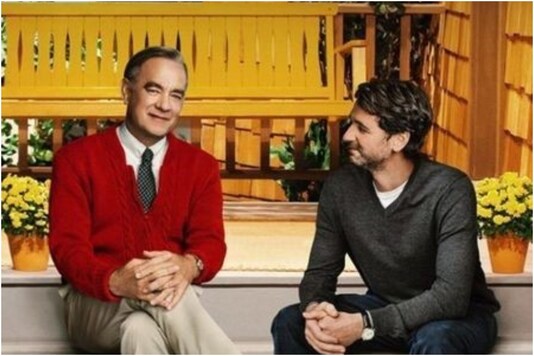
A Beautiful Day in the Neighbourhood is a ‘biopic’ of sorts if one were to go with our colloquial film parlance. Starring Tom Hanks, this film is about a journalist’s life-altering interview with Mr Rogers, a beloved children’s-TV show host. Director Marielle Heller blurs the lines between childhood and adulthood with such remarkable storytelling that it seems nothing short of genius. It is a delightful doffing of the hat to the legacy of kindness.

In the opening shots when you see Tom Hanks as Mr Rogers doing the signature pottering about on the set of his long-running show, changing into his bright red cardigan and blue shoes, it almost appears to be a children’s movie. Before you know it, you are suddenly whizzing down the rabbithole making one startling emotionally-charged discovery after another.

Loosely based on the real-life story of Fred Rogers, host of the popular children’s tv show in America, titled Mr. Rogers’ Neighborhood and his serendipitous interview with journalist Tom Junod for Esquire, the film does surprise you with the deeper more adult father-son story at the heart of it. Given that Tom Junod’s character is a part-fictional Lloyd Vogel (Matthew Rhys) in the film, it allows a fancier flight of imagination. If Rogers was as good as gold then the part-fictional construct that is Vogel helps the story and its dramatis personae.

The writers do a tremendous job of making a straight as an arrow celebrity who delights in being ordinary, come alive on-screen. Small touches like Rogers showing himself struggle when putting up a camping tent and retaining it in the show to make children understand that things don’t always go smoothly in life, make a larger comment on the phenomenon that Rogers was.

A television presenter who despite not following the TV rulebook went on to create television history is certainly a story worthy of being retold but what sets this one apart is that it focuses on him as a medium to help Lloyd Vogel finds his own personal happiness. When Vogel, an investigative journalist assigned to do an interview that he considers a puff-piece first meets Rogers, he is certain that he will be able to dig up some dirt on him. He hunts desperately for the human frailty that will expose Rogers’ sham of being the kindest human being. As it turns out, Vogel’s pursuit and his interactions with Rogers does bring out the host’s more humane side but more significantly, reveals the scribe’s own inner demons.

This emotional play-off between Rogers and Lloyd Vogel makes the film a deeply emotional one and certainly very watchable. It is sort of befitting that Tom Hanks with his indisputable good guy halo plays Rogers. His honest-to-goodness demeanour and earnestness bodes well for the on-screen persona making the character immensely believable. Matthew Rhys’ cynical play of Vogel is the perfect foil to Hanks’ Rogers. In fact, in a clever departure from biopic formulas, this one makes Vogel the central character instead of keeping Rogers at the forefront at all times!

Director Heller’s frequent intercuts between the real world and the make-believe neighborhood with its puppets and toy blocks lends a surreal touch to the film. It feels as though one is witnessing the grown-up protagonists in the story go back to being children under Rogers’ reassuring spell. And while they do snap back to reality, the magic of Rogers’ untainted legacy of kindness leaves you with a warm fuzzy feeling in your heart.

A Beautiful Day in the Neighborhood is among those rare films of post-truth era that makes you believe that good people do exist– even among television hosts.

Rating: 3.5/5

Follow @News18Movies for more


https://pubstack.nw18.com/pubsync/fallback/api/videos/recommended?source=n18english&channels=5d95e6c378c2f2492e2148a2&categories=5d95e6d7340a9e4981b2e109&query=A,Beautiful,Day,in,the,Neighborhood,Movie,Review:,Even,the,Cynics,are,Charmed,by,Tom,Hanks,a,beautiful,day,in,neighborhood,a,beautiful,day,in,neighborhood,cast,&publish_min=2020-06-04T04:34:26.000Z&publish_max=2020-06-06T04:34:26.000Z&sort_by=date-relevance&order_by=0&limit=2

Next Story


Source

Kangana Ranaut's Charming Film Fills You with Hope and Warmth

Panga

Cast: Kangana Ranaut, Jassie Gill, Richa Chada, Neena Gupta, Yagya Bhasin

Director: Ashwiny Iyer Tiwari

Panga, which is titled after the Hindi word for seeking out a confrontation, opens with a scene that – if this were real life and not a film – might have led to exactly that. In the middle of the night a woman kicks her husband repeatedly in her sleep. Her good-natured mister makes a throwaway joke the next morning, and quietly tucks a hot-water bag under his bum at the breakfast table. No arguments, no confrontation. He understands that his wife may have given up kabaddi, but kabaddi isn’t quite out of her system.

On the surface Panga is the inspiring story of a woman who returns to the sport she abandoned in exchange for domestic bliss. You only have to look closer to recognise that it’s actually a charming, feel-good film about unconditional love and the true meaning of family.

Directed by Ashwiny Iyer Tiwari, this thoughtful film asks us to celebrate not only those resilient women who refuse to be restricted by marriage and motherhood in the pursuit of their dreams, but also the supportive husbands and children that are the wind beneath their wings.

32-year-old Jaya Nigam once a national level athlete, seems content with an adoring husband, a cheeky but affectionate son, and a job as a ticket clerk at Bhopal Railway Station. Aside from the nightly ‘kicking’ ritual, and the occasional nostalgia, kabaddi seems firmly in her past as she commits her energies to home and hearth.

Kangana Ranaut is extraordinary as Jaya. There isn’t one false note in her beautiful, lived-in portrayal of a selfless wife and mother. She loves her family more than anything, but knowing that she could have achieved more haunts her ever so often, and Kangana conveys that feeling astutely, mostly without words. When Jaya’s seven-year-old son Adi learns about the sacrifice she made for their family he recruits his father’s help in convincing her to attempt a comeback. Overcoming her initial reluctance Jaya throws herself into the challenge.

Above everything else the writing in Panga is powered by humour and positivity. This is an endlessly optimistic film with generally kind-spirited characters that enable and empower Jaya to pursue her goal and to realise her potential. Her greatest cheerleader is her husband Prashant, played by an impossibly charming Jassie Gill, who encourages her to fly, steps up to shoulder her domestic duties, and does it all with a smile. Prashant is the partner every Indian woman dreams of, and the partner every Indian man will be measured against henceforth.

Her other allies include her precious son Adi, played by Yagya Bhasin, who gets some of the best lines and walks away with every scene that he’s in. Richa Chadha is terrific as Jaya’s best friend and old teammate Meenu whose droll humour and tough love yields some of the film’s funniest moments. A scene in which she draws parallels between specific kabaddi moves and responding to a marriage proposal had me in splits.

A word also for the lovely Neena Gupta who, in only a handful of scenes, makes her presence count. I had a lump in my throat watching the scene in which she asks Jaya to make sure she mentions her in interviews.

Director Ashwiny Iyer Tiwari, who has co-written the film with Nikhil Mehrotra and Nitesh Tiwari, creates an entirely believable world – from the rhythms of life in a small town, to the flesh-and-blood characters playing the tiniest roles. Even in its cheery optimism, and the entirely predictable arc of its sports portions, Panga seldom feels contrived. It does feel overlong in its second hour as the screenplay goes through all the usual sporting clichés, rivalries, and underdog tropes. You know exactly how things will pan out.

Having said that, you’re as invested in Jaya’s journey as her family that’s cheering from the stands. This is a result of the mostly smart writing, and a winning performance from the film’s leading lady. Kangana imbues Jaya with both vulnerability and determination. She conveys the guilt that mothers frequently feel over nursing a personal dream, but she also drives home the message that it’s 2020 and we can’t still be debating whether marriage and motherhood must signal a full stop to a woman’s goals.

The film’s big success is in delivering its message without making a big noise about it. Panga is all about its little moments. It’s a film about love disguised as a sports-movie. I’m going with three-and-a-half out of five. It fills you with hope and warmth. We could all do with that in these times.

Rating: 3.5 / 5

Follow @News18Movies for more


https://pubstack.nw18.com/pubsync/fallback/api/videos/recommended?source=n18english&channels=5d95e6c378c2f2492e2148a2&categories=5d95e6d7340a9e4981b2e109&query=Panga,Movie,Review:,Kangana,Ranaut’s,Charming,Film,Fills,You,with,Hope,and,Warmth,Aswiny,Iyer,Tiwari,Jassie,Gill,&publish_min=2020-06-04T03:52:47.000Z&publish_max=2020-06-06T03:52:47.000Z&sort_by=date-relevance&order_by=0&limit=2


Source

The Only Nice Bits Feature Kartik Aaryan and Newcomer Arushi Sharma

Kartik Aaryan and Arushi Sharma in 'Love Aaj Kal'

Kartik Aaryan and Arushi Sharma in ‘Love Aaj Kal’

Love Aaj Kal 2.0, if you like, is largely contrived and superficial. It’s a love story in search of a conflict. Read our full review of the latest Bollywood film below.

Rajeev Masand
  • News18.com
  • Last Updated: February 16, 2020, 12:02 PM IST

Love Aaj Kal

Cast: Kartik Aaryan, Sara Ali Khan, Randeep Hooda, Arushi Sharma

Director: Imtiaz Ali

With Love Aaj Kal starring Kartik Aaryan and Sara Ali Khan, which is a sort-of remake of his own film of the same name from eleven years ago, Imtiaz Ali has done what few believed was even possible – he’s made a love story that might be more indulgent, contrived, and incoherent than When Harry Met Sejal. And that’s saying something.

Ever since his filmmaking debut in 2005 with the charming Socha Na Tha, you could say that Imtiaz has, within his cinematic universe, been fascinated by the rhythms and the vagaries of love. He’s been committed to telling stories about the redemptive, transformative nature of true love. Occasionally it’s yielded extraordinary results – like it did with Jab We Met, which remains his finest film. Other times it’s been hit or miss.

Like the earlier Love Aaj Kal the new film straddles two love stories across two time zones to make the point that one only has to look to the past to resolve romantic conundrums of the present. In that film Saif Ali Khan’s Jai realised the depth of his feelings for Deepika Padukone’s Meera after listening to Rishi Kapoor’s Veer recount how he found and fought for love as a young man. In an inspired casting choice, Saif also played the younger version of Rishi Kapoor’s character Veer.

I should say here I wasn’t a big fan of the earlier film. Compared to the new one though it’s Gone with the Wind. In present day Delhi, Zoe (Sara Ali Khan) and Veer (Kartik Aaryan) are struggling with the familiar ‘relationship vs career’ dilemma. The update here is that it’s the girl who’s torn between these choices; the guy stands by patiently. Another story, narrated in flashback, becomes the compass that informs the course of this one.

In 1990 Udaipur a young fellow, Raghu (also played by Kartik Aaryan), is smitten by Leena (Arushi Sharma). Theirs is a delicate romance potentially thwarted by objecting parents and a judgmental society. There are some nice bits here, like a scene during a school event where the pair dances awkwardly. But this segment is sweet at best; it’s also mostly inert.

The real problem with the film, however, is the present day track, and particularly the character of Zoe. Between the way she’s rendered on paper and the way that Sara plays her, Zoe is pretty much insufferable. One can appreciate her ambition and her single-minded focus on her event-planner career, but using a feminist argument to justify unbuttoning her blouse while going into a job interview is far-fetched. The work-love conflict that she makes a big deal about isn’t fleshed out enough to feel convincing. Practically nothing about her situation suggests that her relationship with Veer could come in the way of her achieving her professional potential. If anything Veer is supportive and devoted to the point of being a pushover.

Sara plays Zoe as high-strung, shrill, and prone to unprovoked outbursts. Zoe is meant to be complicated and confused, but she comes off as self-important and infuriating. Kartik, meanwhile, fares better. He brings a boyish innocence and goofiness to Raghu, who is experiencing love for the first time. As Veer, his body language is awkward initially, but he grows into the role of the idealistic romantic. Arushi Sharma, in the role of Leena, has a nice, likeable presence. But it’s Randeep Hooda who grounds the film in some modicum of believability. As a man looking back at his life, reflecting on his choices, Randeep brings a lived-in quality that this film is sorely missing.

Love Aaj Kal 2.0, if you like, is largely contrived and superficial. It’s a love story in search of a conflict. In that, it reminded me of Imtiaz’s other film, the polarising Tamasha. Like that film, it doesn’t have a lot to say yet pretends to be deep and profound. The filmmaker’s opinion of the millennial generation and their take on love, sex, and commitment is unmistakably patronising. The film claims to hold a mirror to modern love, yet it judges that very thing.

There is no polite way to say this – Love Aaj Kal is pretty awful and dreadfully boring. It’s also overlong and hammy. The pursuit of romantic fulfilment has seldom felt so banal. I’m going with one-and-a-half out of five.

Rating: 1.5 / 5

Follow @News18Movies for more


https://pubstack.nw18.com/pubsync/fallback/api/videos/recommended?source=n18english&channels=5d95e6c378c2f2492e2148a2&categories=5d95e6d7340a9e4981b2e109&query=Love,Aaj,Kal,Movie,Review:,The,Only,Nice,Bits,Feature,Kartik,Aaryan,and,Newcomer,Arushi,Sharma,Arushi,Sharma,bollywood,&publish_min=2020-06-04T01:32:21.000Z&publish_max=2020-06-06T01:32:21.000Z&sort_by=date-relevance&order_by=0&limit=2


Source

Ayushmann Khurrana Delivers Another Winner

Shubh Mangal Zyada Saavdhan

Cast: Ayushmann Khurrana, Jitendra Kumar, Gajraj Rao, Neena Gupta

Director: Hitesh Kewalya

Smack in the middle of Shubh Mangal Zyada Saavdhan, Ayushmann Khurana’s character Kartik says to his boyfriend’s homophobic father that gay people have to fight every day, but there is no fight harder than the one with your family.

There is unmistakable dignity in the way that the same-sex relationship at the centre of this film has been treated. When we meet the flamboyantly filmi Kartik and his boyfriend Aman (Jitendra Kumar), they are already in love and living together in Delhi. It’s just that Aman hasn’t come out to his family back home in Allahabad. Considering the theme, the dialogues are sensitive and the repartee between the characters frequently crackling.

When Aman does open up about his love for Kartik to his scientist father (Gajraj Rao) and his straight-talking mother (Neena Gupta), he talks of dopamine, oxytocin, and of his hypothalamus. Aman explains his feelings in chemical terms, but it nicely captures the sheer splendour of love.

Admirably, writer-director Hitesh Kewalya doesn’t mine laughs from stereotyping gay characters in the way that mainstream Hindi films have done for as long as one can remember. Aside from an innocuous nose-ring that Ayushmann wears, there are no obvious markers of femininity. What’s especially refreshing is that the lovers or their relationship is never the source of comedy, it’s the extreme reactions by those around them to their relationship that is treated with humor. In that, Shubh Mangal Zyada Saavdhan is not so much about homosexuality as it is about homophobia.

But the humour, as it turns out, is hit and miss. 2017’s Shubh Mangal Saavdhaan cleverly and amusingly beefed up the role of the extended family in what was essentially the story of a soon-to-be-married couple and the ‘problem’ they’re confronted with. This film too puts the family centrestage, but that overcomplicates the story. There’s a trying-too-hard quest for laughs that starts wearing thin. Aman’s folks argue incessantly and blame each other while trying to deal with the ‘situation’, until the story feels stretched and silly. The bullying relationship between Gajraj’s character Shankar Tripathi and his brother Chaman (Manu Rishi) is funny initially, but it works strictly as a side act and loses steam when it becomes the film’s main source of drama and laughs.

A portion in which Tripathi stages a religious ‘rebirth’ ceremony to ‘normalise’ his son doesn’t land, and a subplot involving his invention of black cauliflower is a contrived metaphor.

The immensely likeable Gajraj Rao, trapped in a not-so-likeable character, is both one of the film’s strengths and weaknesses. In a very funny scene, Tripathi has a violent physical reaction when he spots his son in a clinch with his lover while the family is heading by train for a wedding. Tripathi is a real hoot when he’s nervous and vulnerable – like in his impromptu dance-off with Kartik – but there is little joy in the bits where he’s the standard-issue villain-dad.

Even the pairing of Gajraj Rao and Neena Gupta as Aman’s parents, inspired no doubt by their wonderful chemistry in Badhaai Ho, is largely underutilised.

There’s a naughty joke snuck in there about how she relieves her husband’s anxiety, but for the most part the bickering gets tiresome. Aman’s chacha and his hysterical chachi, played by Manu Rishi and Sunita Rajwar, are funnier. In one scene, to underplay the PDA that Aman and Kartik indulge in at their daughter’s wedding, the couple comes up with an explanation so far-fetched, it’s hard to hold back the laughs.

It’s interesting that Kewalya uses the classic Dilwale Dulhania Le Jayenge blueprint to stage this story of parental opposition in the face of true love and a couple’s longing for acceptance from the stubborn family. It’s a smart approach to push out the message that gay relationships are the same as straight ones; the conflicts are all too familiar. Shubh Mangal Zyada Saavdhan also ticks the boxes of an ‘Ayushman Khurrana social message movie’. The gay characters are self-respecting men dead against the idea of marrying a woman out of convenience. Parental denial is also addressed head-on, and frowned upon using clap-trap dialogues.

There are many zingers in the film, delivered with flair and timing by Kewalya’s cast. As Kartik, who wears his heart on his sleeve, ready to go to war for love, Ayushmann Khurrana gets the lion’s share of winning one-liners. He plays Kartik as confident and comfortable in his skin, but also a tad hyper. The film is respectful but never shy of depicting affection between its protagonists, and that’s especially worthy of praise in a famously squeamish, homophobic cinema. So many actors – Sanjay Suri in My Brother Nikhil, Manoj Bajpai in Aligarh, Fawad Khan in Kapoor & Sons, Shabana Azmi in Fire, Kalki Koechlin in Margarita with a Straw, and others – paved the way so Ayushmann and Shubh Mangal Zyada Saavdhan could take the baton and run. The film’s ‘normal’ treatment of the gay character, and Ayushmann’s assertive performance is a victory in itself.

But while all the slow-motion entries and exits go to Ayushmann, the film’s secret weapon is Jitendra Kumar whose Everyman portrayal of Aman is one of the film’s big strengths. The actor, who has appeared in many web series including Kota Factory, has a warm, grounded presence that makes the character’s vulnerability all too authentic. Jitendra and Ayushmann have real chemistry; their little moments together bring depth to the film.

Shubh Mangal Zyada Saavdhan isn’t consistent. The script spends too much time focused on the infighting within Aman’s family instead of staying with the leads. Despite that there is enough to enjoy and appreciate here. It takes a difficult subject and executes it with some flair. For that, I’m going with three out of five.

Rating: 3/5

Follow @News18Movies for more


https://pubstack.nw18.com/pubsync/fallback/api/videos/recommended?source=n18english&channels=5d95e6c378c2f2492e2148a2&categories=5d95e6d7340a9e4981b2e109&query=Shubh,Mangal,Zyada,Saavdhan,Movie,Review:,Ayushmann,Khurrana,Delivers,Another,Winner,Ayushmann,Khurrana,Gajraj,Rao,&publish_min=2020-06-04T00:40:10.000Z&publish_max=2020-06-06T00:40:10.000Z&sort_by=date-relevance&order_by=0&limit=2


Source

Taapsee Pannu is First-Rate in Anubhav Sinha's Compelling Film

Thappad

Cast: Taapsee Pannu, Pavail Gulati, Dia Mirza

Director: Anubhav Sinha

Thappad, as the film’s title so unambiguously suggests, is about a slap. A slap that an otherwise amiable, good-natured man lands on his wife’s face in a moment of misdirected anger. In his defense, it is the first time he has raised his hand on her. In his defense, he has just found out that the professional goal he had nurtured, toiled hard for, and achieved, has been unfairly snatched away from him. In his defense, it happened in the heat of the moment. For his wife, no defense can justify the slap. It changes everything. It practically dismantles her life.

In setting up this premise, director Anubhav Sinha, who has co-written the film with Mrunmayee Lagoo Waikul, asks us repeatedly to consider whether Amrita (Taapsee Pannu) should, like everyone around her suggests, let it go and move on. It shouldn’t have happened, but “ab ho gaya na?” her husband Vikram (Pavail Gulati) laments. Her mother-in-law (Tanvi Azmi), with whom she has a loving relationship, says: “Thoda bardaasht karna seekhna chahiye auraton ko.”

Her own mother (Ratna Pathak Shah) is distraught that she is considering divorce. Her brother describes it as “one small episode”, and thinks “it’s silly” that she’s taking it so far. Her neighbor, a widow (Dia Mirza), delivers that ultimate guilt trap: “Rishte banane mein utni effort nahin lagti jitna nibhane mein lagti hai.” Even her lawyer (Maya Sarao) advises her to go back and make it work.

The film, and the slap at the centre of it, is not about domestic violence. It’s about entitlement. It’s about decades of conditioning. It’s about flawed social structures and outdated gender expectations. In Robert Altman-esque fashion, the film opens with a charming sequence in which an orange ice lolly is used as a motif to introduce several characters, before we learn how each fits into the protagonist’s orbit. Patriarchy and entitlement run deep; Amrita is hardly the only victim.

There is the poor domestic help who suffers beatings from her husband routinely. There is the older woman, resentful that her loving husband never encouraged her to pursue her love for singing after marriage. There is the soon-to-be-married young couple, seemingly equal in their relationship until a tense interaction reveals otherwise. There is also the accomplished professional whose husband repeatedly credits her success to his family’s powerful connections.

When Vikram slaps Amrita, every one of these relationships unravels.

Shrewdly the very premise of the film and Amrita’s escalating reaction to the slap is plotted in such a way that you’re frequently compelled to ask: “Isn’t she taking it too far?” or “Surely she doesn’t need to make such a big deal of it?”

The answer to those questions may be found in Vikram’s unmistakably selfish handling of the situation.

But the thing is – and this is key – there are no easy answers here. The husband is no villain. Vikram is selfish, entitled, conditioned to put himself and his own pride before his wife, but he’s not a bad guy. He’s just every other Indian man. Knowing that, you’re confronted with the same question again: “Isn’t she overdoing it?” Don’t be embarrassed if you’re leaning dangerously close to answering yes; it’s exactly the position Sinha wants you to take. In fact, in a scripting masterstroke he raises the stakes at the halfway mark, putting the couple in such a situation that now you’re thinking: “Okay, this is too much. She must let it go.”

But Thappad isn’t a film about a wife teaching her husband not to take her for granted. It’s about a woman rediscovering her sense of self, contemplating what is fair and what isn’t. It’s about no longer disregarding the deep-rooted sexism and selfishness, and the casual insensitivity that women contend with everyday. If any of this sounds like activism or social-message disguised to look like a movie, it’s honestly not. You’re very much invested in Amrita’s story. She is the fulcrum of Vikram’s uppercrust home in Delhi; she’s a supportive wife and a caring daughter-in-law.

In one bristling moment she points out that the sacrifice of every woman who chooses to be a homemaker can be understood from the simple fact that no little girl when asked what she wants to grow up to be says ‘housewife’.

In a film so well-made, minor quibbles stand out. The second hour feels stretched. The estrangement of Vikram and his mother from his uber rich father and brother is confusing. But these are minor quibbles. Sinha pulls off a complex story and extracts remarkable performances from his ensemble, justifying even those in tiny roles like Ram Kapoor and Manav Kaul.

Of the main cast, Maya Sarao brings a sharp edge to the role of Amrita’s conflicted lawyer, and Geetika Vidya Ohlyan is terrific as her garrulous househelp. Dia Mirza is nicely understated as her neighbor, and both Ratna Pathak Shah and Tanvi Azmi are expectedly in fine form. Kumud Mishra stands out as Amrita’s supportive father, hitting all the right notes, and aided by some of the film’s most loaded lines. Pavail Gulati, in the difficult role of the husband, effectively plays him as clueless to his own shortcomings; it’s a competent performance in a nuanced role.

Which brings us to the film’s axis, Taapsee Pannu. In a refreshing change of image, her Amrita is not the fierce, woman-on-the-warpath that she frequently tends to play. She’s a woman torn, she has both strength and fragility; it’s a beautifully realized performance. The script gives her some great moments to shine, and she seizes them. I was a mess by the time Amrita has that honest, wounding conversation with her mother-in-law towards the end of the film.

I’m going with four out of five for Thappad. It’s a hard subject to pull off, but Anubhav Sinha achieves it with first-rate storytelling. The best films inspire dialogue, they set you thinking; they can even lead to change. This one made me uncomfortable; it made me question myself and I think it will make you too. It’s essential viewing.

Rating: 4/5


https://pubstack.nw18.com/pubsync/fallback/api/videos/recommended?source=n18english&channels=5d95e6c378c2f2492e2148a2&categories=5d95e6d7340a9e4981b2e109&query=Thappad,Movie,Review:,Taapsee,Pannu,is,First-Rate,in,Anubhav,Sinha’s,Compelling,Film,Anubhav,Sinha,Dia,Mirza,&publish_min=2020-06-03T22:31:50.000Z&publish_max=2020-06-05T22:31:50.000Z&sort_by=date-relevance&order_by=0&limit=2


Source

With Lot of Family Drama It's Not a Drab and Dreary Murder Mystery

Home Before Dark

Cast: Jim Sturgess, Brooklynn Prince, Abby Miller

Creators: Dana Fox, Dara Resnik

Home Before Dark, the 10-episode TV show is a fictional narrative based on a real-life nine-year-old investigative journalist, Hilde Lysiak, who broke the news of a national murder, in her self-published paper.

In the show, Hilde Lisko (Brooklynn Prince), a 9-year-old girl fancies herself to be a journalist like her father, Matt Lisko (Jim Sturgess) who works for a newspaper in New York. Unfortunately, Matt loses his job and has to move from Brooklyn back to his father’s house in small-town Erie Harbor, Washington along with his wife Bridget (Abbey Miller), Hilde, and his other two daughters. As it turns out, Matt has a mysterious past that involved the kidnapping and disappearance of his childhood friend Ritchie. A young teenager Sam Gillis (Michael Greyeyes) was arrested for the crime and put behind bars on circumstantial evidence that seemed tentative at best. Matt who had disagreed with the verdict had moved to New York to put the incident behind him.

As soon as Matt and the family arrive in Erie Harbor, the precocious Hilde befriends Sam’s socially ostracised sister Penny, only to find her dead a few days later. Hilde’s fertile imagination and inquisitive nature get her sniffing around for foul play despite the Sherriff’s assurance that Penny’s death was an accident. As things begin to unfold with Hilde’s persistent investigation, all hell breaks loose in the small town and skeletons from the past begin to tumble out. Hilde discovers that Penny’s death is connected to the 30-year-old case to which her own father was an eye-witness.

The story and screenplay in the early episodes layer the mystery very well and are powered by Hilde’s conviction that finding the truth will set her dad free of the burden of his past. As she sets about cocking a snook at her school authorities, the police and occasionally her family in her unwavering search for the truth, Hilde’s actions are mostly annoying and occasionally perplexing to those around her. Luckily despite being smart-alecky–whether standing up to school bullies or chasing up on her elder sister Izzy (Kylie Rogers) after a school prom—she is a likable protagonist through it all. It helps that the charming small-town dynamics and growing pains of the young are well explored throughout the show; plus the twists and turns keep you hooked enough to binge-watch all 10 episodes.

However, towards the end, it seems inevitable that it is the 9-year-old Hilde who’ll get to eventually solve the mystery. Hilde’s character arc also becomes mildly problematic because she goes from being smart to becoming a supersleuth with an almost magical knack of getting to the truth. Given the material, one begins to occasionally feel that Matt, the bonafide journalist in the family will take the lead at some point with Hilde as his chief weapon. Hilde, however, has other ideas. She solves the complex adult mystery entirely by her own smarts, childish appeal, and some incredible luck. The grown-ups are all reduced to being inconsequential support characters to Hilde the Heroine. Even the seemingly threatening characters become somewhat pointless bystanders watching Hilde go about her investigations with gusto. And in that transition which feels rather convenient, HBD becomes lackadaisical, hurriedly tying up the subplots.

Be that as it may, the first season of the series created by Dana Fox and Dara Resnik ends on finding the resolution to the town’s dark mystery and is still quite watchable. What works in the show’s favour is that it is not a drab and dreary murder mystery, but one filled with a lot of family drama. The terrific performance by the young star of the show Hilde (Brooklynn Prince) lifts the show above the mundane. The interplay between Hilde’s two young friends (Deric McCabe and Jibrail Nantambu) her two sisters and the parents make for interesting diversions, but this clearly is Hilde’s show and one that she holds masterfully.

HBD’s skillful crafting keeps the aura of mystery going nicely under the able direction of Jon M Chu (Crazy Rich Asians) and Jim Mckay among others. At the end of the first season, a big part of the mystery is solved, but a final twist leaves it open to exploring a new line of investigation in the next one. With a strong hook for Season 2 that has already stoked much curiosity, HBD could well fill the void left behind by Stranger Things.

Rating: 3/5


https://pubstack.nw18.com/pubsync/fallback/api/videos/recommended?source=n18english&channels=5d95e6c378c2f2492e2148a2&categories=5d95e6d7340a9e4981b2e109&query=Home,Before,Dark,Review:,With,Lot,of,Family,Drama,It’s,Not,a,Drab,and,Dreary,Murder,Mystery,Apple,Home,Before,Dark,&publish_min=2020-06-03T21:26:15.000Z&publish_max=2020-06-05T21:26:15.000Z&sort_by=date-relevance&order_by=0&limit=2


Source

Bollywood's Young Casting Director Krish Kapur Passes Away in Tragic Road Accident

Krish Kapur

Krish Kapur

The news of casting director Krish Kapur’s demise surfaced on Tuesday. The young man passed away in a road accident.

  • Trending Desk
  • Last Updated: June 3, 2020, 3:58 PM IST

Bollywood casting director Krish Kapur has passed away on May 31 in a road accident. He was in his thirties.

According to a report published in Telly Chakkar, Krish had met with a road accident in his hometown on May 31 and succumbed to his injuries the very same day.

He had also been a casting director for Rhea Chakraborty and Varun Mitra starrer Jalebi, and for a web series titled Shubh Ratri.

Meanwhile, the year 2020 has certainly not been a good one for the entertainment industry. Many renowned stars of the film fraternity have left for the heavenly abode in the last few months.

People had not even come to terms with music composer Wajid Khan’s demise, when the news of the young casting director Krish’s death came.

Wajid passed away on Monday in a Mumbai hospital. He was only 42 years old. According to news agency PTI, Wajid had some kidney issues and had also tested positive for COVID-19. His brother Sajid Khan confirmed that he died because of a cardiac arrest.

The music fraternity members including Salim Merchant, Shankar Mahadevan, Vishal Dadlani, Zakir Hussain and many others condoled the music composer’s death.

He was also remembered by legendary bollywood actor Amitabh Bachchan, who took to social media to express his grief. He said, “T 3548 – Shocked at the passing of Wajid Khan .. a bright smiling talent passes away .. duas , prayers and in condolence”

Other actors who condoled the singer’s sudden demise were Varun Dhawan, Priyanka Chopra, Salman Khan, Parineeti Chopra, Akshay Kumar among many others.

Follow @News18Movies for more


https://pubstack.nw18.com/pubsync/fallback/api/videos/recommended?source=n18english&channels=5d95e6c378c2f2492e2148a2&categories=5d95e6d7340a9e4981b2e109&query=Bollywood’s,Young,Casting,Director,Krish,Kapur,Passes,Away,in,Tragic,Road,Accident,jalebi,Krish,Kapur,&publish_min=2020-06-03T21:10:57.000Z&publish_max=2020-06-05T21:10:57.000Z&sort_by=date-relevance&order_by=0&limit=2

Next Story


Source

Celebs Take to the Streets to Join Black Lives Matter Protests

Ben Affleck to Ariana Grande: Celebs Take to the Streets to Join Black Lives Matter Protests

From Ben Affleck, Ana de Armas, Jamie Foxx to Kehlani, Cole Sprouse, Ariana Grande and Halsey, here are some celebrities who participated in the Black Lives Matter protests.

  • Trending Desk
  • Last Updated: June 3, 2020, 11:12 PM IST

Last few days witnessed massive protests in major cities across the United States to demand justice against the death of George Floyd. Floyd passed away last week due to neck restraint caused by a Minnesota police officer Derek Chauvin, who kneeled on his neck for almost nine minutes. The brutal incident sparked rage after recordings surfaced and circulated widely on social media.

Protesters launched Black Lives Matter demonstrations in hope to inspire systemic solutions against police brutality. While some rallies were peaceful in a few places, others proved violent with looting and arrests.

Several eminent celebrities decided to march on the streets alongside civilians and activists. Actors, singers and others were spotted wearing masks while standing in solidarity.

Ben Affleck and Ana de Armas

The actors were spotted at a protest in Venice, California, on Tuesday.

Camila Cabello and Shawn Mendes On Sunday, the Senorita singers joined protests in Miami holding up Black Lives Matter signs.

Ariana Grande

Grande was peacefully protesting with her boyfriend Dalton Gomez and friends throughout Beverly Hills and West Hollywood.

Halsey and Yungblud During a gathering in Los Angeles, Halsey who reached with her boyfriend Yungblud, claimed she was hit with rubber bullets.

Tessa Thompson

Thompson joined the crowd at the L.A Black Lives Matter protest and documented her experience.

Nick Cannon Cannon travelled to Minneapolis to join marches and was seen speaking to people in the crowd.

Kehlani

Kehlani participated in the L.A. march with protestors over the weekend.

Timothée Chalamet Over the weekend, the Little Women star joined those kneeling at the Santa Monica Pier.

Tinashe

Tinashe was a part of the Los Angeles march. She shared a series of photos and wrote, “Show up.”

Miguel The singer captioned on Instagram,”It was good to be in solidarity together today here in LA”.

Jamie Foxx

The actor on Monday ventured to San Francisco and was actively addressing the crowds.

Cole Sprouse Sprouse revealed that he was arrested in Santa Monica, California while peacefully protesting.

A group of peaceful protesters, myself included, were arrested yesterday in Santa Monica. So before the voracious horde of media sensationalism decides to somehow turn it about me, there’s a clear need to speak about the circumstances: Black Lives Matter. Peace, riots, looting, are an absolutely legitimate form of protest. the media is by nature only going to show the most sensational, which only proves a long standing racist agenda. I was detained when standing in solidarity, as were many of the final vanguard within Santa Monica. We were given the option to leave, and were informed that if we did not retreat, we would be arrested. When many did turn to leave, we found another line of police officers blocking our route, at which point, they started zip tying us. It needs to be stated that as a straight white man, and a public figure, the institutional consequences of my detainment are nothing in comparison to others within the movement. This is ABSOLUTELY not a narrative about me, and I hope the media doesn’t make it such. This is, and will be, a time about standing ground near others as a situation escalates, providing educated support, demonstrating and doing the right thing. This is precisely the time to contemplate what it means to stand as an ally. I hope others in my position do as well. I noticed that there are cameras that roll within the police cruisers during the entirety of our detainment, hope it helps. I’ll speak no more on the subject, as I’m (1) not well versed enough to do so, (2) not the subject of the movement, and (3) uninterested in drawing attention away from the leaders of the #BLM movement. I will be, again, posting the link in my story to a comprehensive document for donations and support.

A post shared by Cole Sprouse (@colesprouse) on

Kendrick Sampson

Sampson was shot with rubber bullets while demonstrating in Los Angeles.

Lauren Jauregui The former Fifth Harmony singer shared her experience on Twitter from her participation in the Miami march on Saturday.

Follow @News18Movies for more


https://pubstack.nw18.com/pubsync/fallback/api/videos/recommended?source=n18english&channels=5d95e6c378c2f2492e2148a2&categories=5d95e6d7340a9e4981b2e109&query=Ben,Affleck,to,Ariana,Grande:,Celebs,Take,to,the,Streets,to,Join,Black,Lives,Matter,Protests,Ana,de,Armas,ariana,grande,&publish_min=2020-06-03T20:53:22.000Z&publish_max=2020-06-05T20:53:22.000Z&sort_by=date-relevance&order_by=0&limit=2

Next Story


Source

Here's How Hindi is Providing a New Market for Kannada Films

Fight it out, to find favour in the Hindi belt – that’s the formula Kannada filmmakers have zeroed in on, for a successful box office run, after seeing that many of their films find good audiences and sell well in north Indian states like Uttar Pradesh, Bihar and Madhya Pradesh.

As the language debate rages on in south India about how Hindi should not be imposed on school children, there is a different Hindi connect that Kannadigas are making with Hindi – Many Kannada films are finding a good market once they are dubbed in Hindi, as long as they have enough action and fighting sequences. In fact, some directors say even films that don’t do well in Karnataka make reasonably-enough money up north.

Recent films like KGF: Chapter 1, Kiccha, El Dorado and Chandra and many others have found many takers after being dubbed into Hindi or other regional languages.

“See we have 2 kinds of audiences – the ‘multiplex audiences’ who follow movies which are not necessarily action-oriented and ‘non-multiplex audiences’ who would like to see something ‘big’ happen and find action sequences the most interesting part of any film. So these riveting action films are being dubbed and enjoyed by north-Indian states such as the north east, Mumbai, UP and MP,” says Pushkara Mallikarjunaiah, who heads production house Pushkar Films known for movies such as Godi Banna, Saadarana Maikattu.

His next film Avane Srimannarayana is getting dubbed in four languages before its scheduled release in August.

“Every society has its own sector of people; north-India has its own taste for mass action films,” says film writer, screen-writer and director Santosh Ananddram.

Dubbed Kannada movies were seen as a threat to local culture. But now, trends are changing the perspectives of film-makers. Kannada films are being dubbed in Tamil, Malayalam, Telugu, Hindi, Marathi and Bengali. Post 2017, all south films have raised their bars and are attracting Hindi audiences. Most of the Hindi versions of Kannada films are found on Set Max. The quality of voices in the dubbed films has improved tremendously because of high demand for these films.

Kannada films are also seen more on television in their Hindi avatars.

The set template these days is that any Kannada film has at least three fights – in fact, stunt masters have started commanding more money purely because of this.

Ananddram says Kannada films dubbed into other languages sell best in Maharashtra, UP and Bihar. “Viewer percentage of our action films in the north is more than 60% otherwise big guys wouldn’t take our films into the Hindi belt. The minimum number of fight sequences that should be there is 3 and maximum is 5. Because if it is more than 5 with the same presentation, that takes place multiple times, people will get bored. Action plays a major role but it should be coined and portrayed in the right way.”

A national-award winning producer says the audience that goes to a multiplex also thinks of the other add-on costs like parking, food, etc, at the mall. “Nowadays, unless the film or the film songs are a big hit, people think twice before going to the theatre since Netflix or Amazon turns out cheaper and more convenient,” he says.

Under the circumstances, even Kannada films with top heroes have flopped. “They sell these to channels and then push the film into the Hindi belt. Eventually they find a good number of Hindi/Bhojpuri/North-Indian viewers. If there are at least three to four fights, then the movies make for good entertainment and many watch in north India.”

Ravi Varma, a stunt-master for many Kannada, Telugu, Tamil and Hindi films, says they come up with different stunts and fight sequences based on every story-line.

“Some people enjoy a natural setting while others enjoy watching heroism. Each story demands a different type of action sequence or stunts. We come up with rip-roaring fight sequences and stunts in order to please the audience after understanding the crux of the story.”

Each story requires the use of different props. Coconuts, lights, pans, pots, sugarcane sticks etc. are used to enhance the storyline – depending on what is available in the natural setting in that point of the story.

“If the scene is based in a village or an open ground, we resort to using ropes, sickles, trees, coconuts, cars, rods, bamboo sticks etc. Fake glass can also be used as a prop for action. In the indoor setting, things like fans, chairs, tables, knives, guns, pots, pans wood etc is used. Each scene calls for the use of different but appropriate props,” Varma says.

The release of KGF on 21st December, 2018, which became a superhit, also changed drastically the way Kannada films are seen. “No other film made such a huge deal in the film industry. This movie got people’s attention to the Sandalwood film industry,” says Adarsh Eshwarappa, a director.

People all over India wanted to watch KGF in various languages and is the most-viewed Kannada film with 8.3 stars.

Ananddram says the diverse genres of films in Kannada also seems to have clicked in the north. “Bollywood films stopped catering to north-Indians, because of their greater focus on the story and less action. They mostly have monotonous content or similar story-line. Kannada films offer variety (thrillers, mysteries, romances – all of it, with some amount of action.) This is of the reasons why south is getting its own recognition these days.” said Santhosh Ananddram.

Former president of the Karnataka Film Chamber of Commerce KV Chandrashekar says the additional advantage is that it is quite inexpensive to dub Kannada movies to other languages. So this additional spend doesn’t burn a hole in anyone’s pocket.

As all of South India raises its voice against forcing Hindi on school children, Kannada films making a hit in north India should perhaps raise another movement – spread Kannada in the north!

(Witten by Nicole Serrao)

Follow @News18Movies for more


https://pubstack.nw18.com/pubsync/fallback/api/videos/recommended?source=n18english&channels=5d95e6c378c2f2492e2148a2&categories=5d95e6d7340a9e4981b2e109&query=Here’s,How,Hindi,is,Providing,a,New,Market,for,Kannada,Films,,&publish_min=2020-06-03T20:48:59.000Z&publish_max=2020-06-05T20:48:59.000Z&sort_by=date-relevance&order_by=0&limit=2


Source

Cannes Film Festival Announces 56 Titles, None are Indian

One must hail the Cannes Film chief, Festival Thierry Fremaux, for his remarkable resilience to get the event up and running – albeit not in the shape and form I and most of us have been used to for decades. With Coronavirus pandemic playing spoilsport, the festival will not take place in the French Riviera. But the 56 movies which Fremaux and his team picked from 2067 titles that were submitted by Cannes faithfuls and the newest of aspirants will be screened at different festivals, like– Busan, Deauville, Toronto, San Sebastian, New York, Telluride, Morelia, Sundance and Fremaux’s own Lumiere in Lyon.

Unfortunately, despite great expectation, Venice will not partner with Cannes as I learn that the Lido (the island where Venice takes place)event, could not come to an agreement.

The Cannes 2020 selections were announced through Canal Plus instead of the usually crowded auditorium in Paris where journalists and photographers had to virtually rub shoulders. With social distancing a reality, this was impossible this year.

However, what will be remembered for a long is Fremaux’s determination to not just put his Festival together, but also refrain from going digital. He has been a great advocate of the big screen. He has always contended that the digital platform has its place and importance, but can never replace the cinema and its magic and grandeur.

This year, the 56 films have not been categorised under different heads like Competition, Out Of Competition, A Certain Regard, Midnight Screenings and Special Screenings. And, what is perhaps even more disappointing is the suspense and excitement leading up to the awards ceremony when the Palm dÓr is announced. It will be sorely missed. As one writer quipped. “This was the phantom announcement of the phantom Cannes. A cancelled Christmas when all we got in our stocking was a list of the presents we are not getting”.

Yet again, I do not see an Indian work among the selections. Disappointing, but not totally unexpected, given the quality of cinema that India continues to place on its conveyor belt, obsessed as it is with sheer numbers and little else.

Each of the 56 titles would bear the Cannes 2020 stamp, although we would never know how they will fare in the months to come. Will they shine or just vanish without a trace?

Now for the movies. Wes Anderson, Kate Winslet and Steve McQueen are the most prominent names in the Cannes list. Anderson’s The French Dispatch has been touted as “a love letter to journalists”. It is set in a Parisian office of a publication styled on The New Yorker, and has Bill Murray, Tilda Swinton and Benicio del Toro in the cast.

McQueen’s has two features – Lovers Rock and Mangrove – explores the history of West Indian immigrants in London from the 1960s to the 1980s. The work dramatises the real-life case of Mangrove 9 in 1970 about police racial brutality in London. Timely, given what we are seeing in the US today. Lovers Rock is a romance set in the 1980s.

McQueen said in a statement: “I dedicate these films to George Floyd and all the other black people that have been murdered, seen or unseen, because of who they are, in the US, UK and elsewhere. ‘If you are the big tree, we are the small axe.’ Black Lives Matter.”

Though Hollywood is noticeably absent from the Cannes list with studios preferring to wait out the pandemic, the Festival was able to clinch the Kate Winslet starrer, Ammonite, helmed by British movie-maker Francis Lee. Ammonite centres on real-life fossil hunter Mary Anning (played by Winslet) who lived in Lyme Regis in the early 19th century and had a lesbian relationship with a wealthy married woman.

Debutant British director Ben Sharrock gets a Cannes listing for his Limbo, a drama about refugees waiting to be granted asylum on a Scottish island.

Cannes is also going to look very French this season with many helmers in the list, the most prominent among them being Francois Ozon with his Summer of 85, a tense teen drama (Remember his Swimming Pool?).

We also have new animated work from Pixar, Soul, directed by Pete Docter that features Jamie Foxx as a jazz musician whose soul separates from his body, while Falling, the directorial debut of Lord of the Rings’ Viggo Mortensen, has been added to the line-up. Aya And The Witch from Goro Miyazaki, son of the legendary Hayao Miyazaki, is based on the novel Earwig and the Witch, by the British author Diana Wynne Jones (who wrote Howl’s Moving Castle, the source for another iconic Ghibli gem).

This time, Cannes will have 16 women directors, compared with 14 last year and 11 in 2018. Fremaux had come in for a lot of criticism because many felt that the Festival was under-representing female helmers. He said: “The 16 women auteurs represented an evolution observed for several years…It testifies, in number and in value, to the artistic and human contribution of women in contemporary cinema.” Among the crop of female directors for 2020 are Maïwenn, Charlène Favier and Naomi Kawase (a Cannes regular from Japan).

Full list of films

The French Dispatch (dir: Wes Anderson)

Summer of ’85 (dir: François Ozon)

True Mothers (Naomi Kawase)

Mangrove and Lovers Rock (dir: Steve McQueen)

Druk (dir: Thomas Vinterberg)

DNA (dir: Maïwenn)

Last Words (dir: Jonathan Nossiter)

Heaven (dir: Im Sang-soo)

El Olvido que Seremos (dir: Fernando Trueba)

Peninsula (dir: Sang-ho Yeon)

In the Dusk (dir: Sharunas Bartas)

Des Hommes (dir: Lucas Belvaux)

The Real Thing (dir: Koji Fukada)

Passion Simple (dir: Danielle Arbid)

Good Man (dir: Marie-Castille Mention Schaar)

The Things We Say, The Things We Do (dir: Emmanuel Mouret)

Souad (dir: Ayten Amin)

Limbo (dir: Ben Sharrock)

Rouge (dir: Farid Bentoumi)

Sweat (dir: Magnus von Horn)

Teddy (dir: Ludovic and Zoran Boukherma)

February (dir: Kamen Kalev)

Ammonite (dir: Francis Lee)

Un Médecin de Nuit (Elie Wajeman)

Enfant Terrible (dir: Oskar Roehler)

Nadia, Butterfly (dir: Pascal Plante)

Here We Are (dir: Nir Bergman)

Septet: The Story of Hong Kong (dirs: Ann Hui, Sammo Kam-Bo Hung, Ringo Lam, Patrick Tam, Johnnie To, Tsui Hark, John Woo, Woo-Ping Yuen)

Falling (dir: Viggo Mortensen)

Pleasure (dir: Ninja Thyberg)

Slalom (dir: Charlène Favier)

Memory House (dir: João Paulo Miranda Maria)

Broken Keys (dir: Jimmy Keyrouz)

Ibrahim (dir: Samuel Gueismi)

Beginning (dir: Déa Kulumbegashvili)

Gagarine (dirs: Fanny Liatard, Jérémy Trouilh)

16 Printemps (dir: Suzanne Lindon)

Vaurien (Peter Dourountzis)

Garçon Chiffon (dir: Nicolas Maury)

Si Le Vent Tombe (dir: Nora Martirosyan)

John and the Hole (dir: Pascual Sisto)

Striding into the Wind (dir: Wei Shujun)

La Mort du Cinema et de Mon Père Aussi (dir: Daniel Rosenberg)

The Billion Road (dir: Dieudo Hamadi)

The Truffle Hunters (dir: Michael Dweck and Gregory Kershaw)

9 Days at Raqqa (dir: Xavier de Lauzanne)

Antoinette dans les Cévennes (dir: Caroline Vignal)

Les Deux Alfred (dir: Bruno Podalydès)

Un Triomphe (dir: Emmanuel Courcol)

Le Discours (dir: Laurent Tirard)

L’Origine du Monde (dir: Laurent Lafitte)

Aya and the Witch (dir: Goro Miyazaki)

Flee (dir: Jonas Poher Rasmussen)

Josep (dir: Aurel)

Soul (dir: Pete Docter)

Follow @News18Movies for more


https://pubstack.nw18.com/pubsync/fallback/api/videos/recommended?source=n18english&channels=5d95e6c378c2f2492e2148a2&categories=5d95e6d7340a9e4981b2e109&query=Cannes,Film,Festival,Announces,56,Titles,,None,are,Indian,Cannes,Cannes,2020,&publish_min=2020-06-03T20:22:16.000Z&publish_max=2020-06-05T20:22:16.000Z&sort_by=date-relevance&order_by=0&limit=2


Source

Bengaluru Artist Claims Saaho Poster Copied From Her Burning Man Art Installation

Bengaluru Artist Claims Saaho Poster Copied From Her Burning Man Art Installation

A Bengaluru based artist has claimed that the makers of Saaho have copied design ideas from her installation for the Burning Man Festival in 2014 for a setting in the song Baby Won’t You Tell Me.

  • News18.com
  • Last Updated: August 30, 2019, 3:50 PM IST

Just in time for its release, Prabhas and Shraddha Kapoor starrer Saaho has kicked up another storm. The makers of Saaho have been accused of stealing a Bengaluru artist’s work without permission.

Shilo Shiv Suleman, an Indian contemporary artist, posted a picture of her installation from 2014’s Burning Man festival. In the long caption, the artist accused the makers of Saaho of recreating her installation, called Pulse and Bloom, for the set of the song Baby Won’t You Tell Me. The song was released earlier this week and features Prabhas and Shraddha romancing in a number of fairy-tale like settings.

Read: Prabhas, Shraddha Kapoor Romance in Burning Man-Like Sets in Saaho Song Baby Won’t You Tell Me

Shilo Shiv Suleman said on Instagram, “Where does inspiration come from? What (sacred) wells do we drink from when we create from an original and authentic space? This week people from across the world gather back together in that dust @burningman and I am reminded of how much of my creation comes from my (beating) heart. Pulse and bloom is a biofeedback installation that reacts to people’s heartbeats, and it came to exist because of a series of personal relationships.”

“It was born from love (like me). We had support from @burningman but we also pulled out of our own pockets to make it manifest. I left my home for the first time, moved to another country, went out into that desert. It cost me a heart. It was a gift, and a sacrifice for all of us involved, and changed the paths of all our lifelines. I’m quite certain it was intended for me to create this installation. I’m certain that the sand storms, the dust, the rose-pink clouds, the thunderstorms gathered around it intentionally, for me.”

“What happens when that story gets taken without your permission? I am known by my creation. #pulseandbloom. (sic)”

After Shilo posted her statement on her social media page, @dietsabya, an Instagram account that calls out plagiarism in the fashion industry, posted images of the installation and the poster of Saaho side by side as a comparison.

You can watch the whole song here:

Follow @News18Movies for more


https://pubstack.nw18.com/pubsync/fallback/api/videos/recommended?source=n18english&channels=5d95e6c378c2f2492e2148a2&categories=5d95e6d7340a9e4981b2e109&query=Bengaluru,Artist,Claims,Saaho,Poster,Copied,From,Her,Burning,Man,Art,Installation,Bengaluru,artist,Shilo,Shiv,Suleman,Burning,Man,&publish_min=2020-06-03T19:47:12.000Z&publish_max=2020-06-05T19:47:12.000Z&sort_by=date-relevance&order_by=0&limit=2

Next Story


Source

The Masterful Chronicler of Urban Life and Aspirations

In Basu Chatterjee’s film Piya Ka Ghar, we meet a newly married couple, Malti (Jaya Bhaduri) and Ram (Anil Dhawan) who are struggling to find space for love in their small home at a Bombay chawl, where they live with Ram’s entire family. The couple never seems to be alone to talk or make love as the house is always populated with Ram’s many family members. 48 years later, the realities of living in Mumbai chawls are no different, although, the masterful chronicler of such urban lives, Basu Chatterjee, is no more. The filmmaker died in Mumbai on Thursday due to age-related problems. He was 93-years-old at the time of his death.

One of Chatterjee’s most significant contributions to Indian cinema is that he along with Mani Kaul, and Mrinal Sen, produced the famous triads of 1969 — Sara Akash, Uski Roti, and Bhuvan Shome — which formally ushered in the ‘new wave’ movement in Indian cinema. It was a year after Film Finance Corporation (FFC) decided to back new filmmakers with innovative ideas and experimental techniques. Although parallel cinema, which has existed from as early as 1925, was already gathering steam with Satyajit Ray, Bimal Roy and Ritwik Ghatak in the 50s, and early 60s, these three films broke the mould of parochial storytelling and invented new grammar and style, introduced us to characters, not just heroes.

One of the reasons Chatterjee’s movies are so relatable is because they erased the line between fiction and realism. Markedly different from the (Italian) neoliberalism inspired Satyajit Ray’s parallel films– that were influenced by the films of Vittorio De Sica and Jean Renoir — which often talked about the class warfare, the stories of the poor and the oppressed, most of Chatterjee’s stories were unmistakably about the bourgeoisie.

Read: A Look Back at Some Memorable Songs from Basu Chatterjee’s Films

Read: A Look At Some Of Masterpieces By Legendary Filmmaker Basu Chatterjee

He populated his films with characters that closely resembled members of the middle class — many of his female protagonists were working women, like Vidya Sinha in films like Chotti Si Baat and Rajnigandha. They dressed like average women did on the streets and did not resemble the glamorous Yash Chopra heroines who made waves for their fashion sense in Kabhi Kabhi during the 70s. The characters in Chatterjee’s films were mostly urban, lived in big cities, in modest homes, and had access to the latest technology like the telephone. That is what made his films intimate and personal for many urban, middle-class movie lovers.

The problems and aspirations of these characters were familiar too, and mostly there were no vicious villains stirring up troubles. His films presents the characters with various life choices, and problems — how to win over a girl in Dillagi and Chotti Si Baat, or how to choose between two very different kinds of loves in Rajnigandha, or how to decide whether you want to marry someone you are just dating in Baton Baton Mein — and handhold the audiences as they see these characters navigate the course of life. Characters in Chatterjee’s films, much like real humans, also resolve their conflicts through internal dialogues, trying to understand their own selves, and the people they love which is perhaps the primary preoccupation of every human that ever existed.

His movies also never came with neatly tied endings, or with an extreme climax where life and death hinged on a cliff. The climaxes of his films arrived, as any end in life does, gradually and irrespective of our preferences. In Rajnigandha, for instance, while Sinha’s character waits desperately for her ex-lover to return her love through his letter, he doesn’t.

Chatterjee’s films exude a certain warmth, a familiar feeling like the comfort of home-cooked meals, or the touch of mother’s hand on the forehead. It is perhaps because it not only introduces us to our own problems, our kind of people onscreen but also because it takes us back to similar kinds of homes, and cities we inhabit. Chatterjee, in fact, shows an inordinate amount of love for the city of Bombay in many of his films, where it almost acts as a character. Amitabh Bachchan and Moushumi Chatterjee enjoy the monsoon at the marine drive to the tunes of Rim Jhim Gire Sawan, in the film Manzil.

When Vidya Sinha’s character visits Mumbai for a job interview in Rajnigandha, Dinesh Thakur’s character (who was her ex-boyfriend in the film)takes her out to eat at all iconic Mumbai restaurants, Tina Munim and Amol Palekar’s characters meet in Bandra to Churchgate local in Baton Baton Mein. Chotti Si Baat too is crowded with scenes from everyday lives in the city.

A classic case of Chatterjee’s stories not working without its rooted realism is Main Prem Ki Deewani Hoon, which was a remake of his popular movie, Chitchor. While a village couple trying to marry their beautiful daughter off to a city engineer seems like a familiar story of many middle-class homes, it doesn’t take off at all when the same story is told with over-the-top acting of Kareena Kapoor and Hrithik Roshan, exotic foreign locales, and a talking bird.

The beauty of Chatterjee’s films lies in the simplicity with which he presents complex human dynamics and his ability to find the beauty of mundaneness. One of his many strengths as a filmmaker was his deep understanding of the middle-class psyche, which shines through films in which he navigates social issues. In Chameli Ki Shadi, he not only gives Bollywood a strong feminist character but also holds up a mirror at the deeply rooted caste system of India. In Kamla Ki Maut, the idea of moral, and societal judgment is so beautifully dealt with, as chawl members process the news of a 20-year-old’s suicide because she became pregnant before marriage.

Chatterjee, along with Hrishikesh Mukherjee, also brought on Indian screens a gentle, and simple kind of comedy, that we have never had the privilege to experience ever again. If Bollywood was defined by an angry young man in the 70s, it was also significant for this rare brand of comedy that Chatterjee introduced.

Follow @News18Movies for more


https://pubstack.nw18.com/pubsync/fallback/api/videos/recommended?source=n18english&channels=5d95e6c378c2f2492e2148a2&categories=5d95e6d7340a9e4981b2e109&query=Basu,Chatterjee,(1930-2020):,The,Masterful,Chronicler,of,Urban,Life,and,Aspirations,Basu,Chatterjee,Chhoti,Si,Baat,&publish_min=2020-06-03T19:18:49.000Z&publish_max=2020-06-05T19:18:49.000Z&sort_by=date-relevance&order_by=0&limit=2


Source

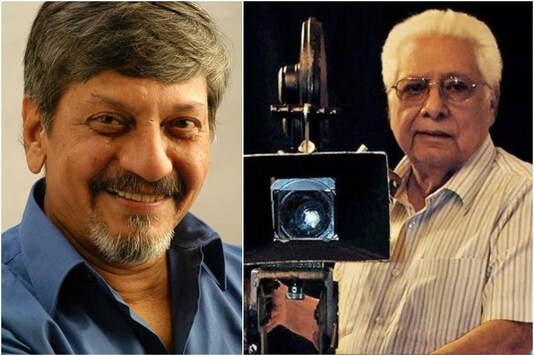
Basu Chatterjee Never Got His Due from Industry: Frequent Collaborator Amol Palekar

Amol Palekar (L), Basu Chatterjee (R)

Amol Palekar (L), Basu Chatterjee (R)

Basu Chatterjee could tell simple stories with much conviction perhaps because he never took himself or his success seriously, said 75-year-old actor Amol Palekar.

  • PTI
  • Last Updated: June 5, 2020, 8:14 AM IST

Filmmaker Basu Chatterjee’s films are relevant even today as they were simple stories told in an assuming manner, says actor Amol Palekar, the star of many of the director’s middle-of-the-road brand of cinema.

Chatterjee’s films are quoted by filmmakers for challenging the theatrics of commercial cinema while being more accessible than parallel films of the era, but Palekar believes the veteran filmmaker was never given due credit by the industry or media.

Chatterjee, one of the pioneers of this gentler style of cinema in the country, breathed his last at his home in Mumbai on Thursday. He was 93.

In an interview with PTI, Palekar, whose partnership with the filmmaker stretched through eight films, remembered Chatterjee’s unmistakable simplicity and contribution to the common man’s cinema.

The duo first worked on “Rajnigandha” in 1974, followed by a string of successes in the form of “Chhoti Si Baat”, “Chitchor” and “Baton Baton Mein”, which cemented Palekar’s position as the everyday man’s hero.

“He kept on making parallel films, without making any commercial compromises and yet made very successful films. He, being one of the pioneers in that, I feel the industry and the media never acknowledged this fact, this contribution of Basu da. I feel really sorry, that what was due to him, was never ever given to him,” the veteran actor said.

Palekar said it’s important to look at the films Chatterjee made with a historical lens.

The rise of Chatterjee’s brand of cinema in the 1970s was parallel to the larger-than-life action dramas of the times. Yet, amid all the blockbuster noise, Chatterjee chose to chronicle quieter stories of life’s ordinariness.

“At that time, on one hand there was this mainstream cinema, where everything was�and still is�larger-than-life. Where you needed and still do, a dramatic story, fast-paced twist-laden narratives, Basu da’s films were devoid of any of this.

“His films had simple stories told in an unassuming manner. Yet, they were so interesting, you simply loved them. His films are still relevant because he talked about common men, ordinary people.”

Chatterjee could tell simple stories with much conviction perhaps because he never took himself or his success seriously, said the 75-year-old actor.

“Basu da was such a lovely, simple human being. One of the greatest qualities I learnt from him was never to be bitter or critically caustic about anything.

“He had this lovely sense of humour. He looked at life with humour, which is such a boon. No matter what the situation, he knew how to smile and laugh. He was enchanting, simple like his films. The best part was that he remained so, despite all the success.”

While his films invoke sweet nostalgia of the simpler times, they also find resonance with the everyday struggles of the common man even today, Palekar said.

“The characters were so real. When you watch a Basu da film, you feel ‘Oh, I know this boy!’ or ‘Yes, this is exactly what my problem was yaar.’ To touch that core, Basu did it so effortlessly and beautifully.”

This type of “Basu Chatterjee guy”, Palekar said, was the kind he would pick from his everyday life. He looked for inspiration not from the prototype on screen, but from people on the streets.

“He didn’t talk of heroes, of Ram, Laxman or the most superior men that heroes are expected to be. Our heroes are supposed to be so larger-than-life that at one stage they become unreal.

“But he never talked about such characters or stories. He looked at lives around him, which one would identify easily.”

For Palekar, the key to their partnership was “simplicity”.

Looking back at their legacy with utmost fondness, the veteran actor said he’s grateful for the movies they made together.

“We did so many films, created so many memories. But we never spoke about his favourite performances of mine. He never said, I never asked,” he added, almost reminiscent of their song “Na Bole Tum, Na Maine Kuch Kaha” from “Baaton Baaton Mein”.

Follow @News18Movies for more


https://pubstack.nw18.com/pubsync/fallback/api/videos/recommended?source=n18english&channels=5d95e6c378c2f2492e2148a2&categories=5d95e6d7340a9e4981b2e109&query=Basu,Chatterjee,Never,Got,His,Due,from,Industry:,Frequent,Collaborator,Amol,Palekar,Amol,Palekar,Basu,Chatterjee,movies,&publish_min=2020-06-03T18:46:58.000Z&publish_max=2020-06-05T18:46:58.000Z&sort_by=date-relevance&order_by=0&limit=2


Source

A Minor Entry In Anurag Kashyap's Varied Filmography

Choked-Paisa Bolta Hai

Cast: Saiyami Kher, Roshan Mathew, Amruta Subhash

Director: Anurag Kashyap

‘Choked’, the title of Anurag Kashyap’s new film, works on two levels. It is both the state of a drainage pipe in a residential building that becomes the source of unexpected wealth, and it is also the momentary condition that comes over the film’s protagonist at a crucial point in her promising career that derails the rest of her life.

Kashyap has called ‘Choked’ the warmest film he’s made yet, and while it may be a stretch to use the word ‘warm’ to describe a movie about the corrupting power of ill-gotten money, it may well be among his least cynical films.

Not that you can tell straight away. Sarita (Saiyami Kher) is a middle-class Maharashtrian woman stuck in a joyless job as a cashier at a local bank, who returns home everyday to an unemployed husband, a young son, and a houseful of chores. She’s at her wit’s end with Sushant (Roshan Mathew), who was a struggling musician once; now he can’t hold a job, he just bums around doing nothing. On top of that his creditors won’t stop calling her.

Kashyap stages their domestic disharmony in a modest rented flat within the sort of suburban housing society that is a microcosm of Mumbai. Neighbors walk in and out of each other’s homes seeking help for all manner of struggles, to exchange gossip about other residents, or simply to check what’s cooking. Amruta Subhash is terrific as ‘Tai’, a nosy divorcee in the flat downstairs overwhelmed by all the arrangements for her daughter’s wedding. This is an authentic world, and Kashyap populates it with characters one can recognize and creates scenarios that feel familiar. In one crackling scene, Sarita and Sushant, laying in bed at night, their son asleep between them, break into an argument but in whispers. Within moments it escalates into a high-decibel exchange, both parents badgering the child to take their side.

But Kashyap isn’t making his version of “Marriage Story”. Or maybe he is…but with a twist. When Sarita discovers bundles of cash thrown up by a leaking drain in the kitchen one night, it becomes a test of her character, and it tests her marriage. Should she tell Sushant? Should she clear his debts with the money? Should she look for more where that came from? Should she find out who the money belongs to?

The script, by Nihit Bhave, packs some winning moments. Like Sarita thinking on her feet to protect her kitchen and the secret it holds when Tai’s wedding guests must be accommodated in her home. The makers throw a curveball in the form of 2016’s Demonetization and the phasing out of existing currency notes.From here the film takes the shape of a suspense thriller, but it also becomes convoluted and frequently confusing.

It’s clear that Kashyap and Bhave are interested in exploring the ethical and moral questions around keeping what doesn’t belong to you, and the greed that it breeds. But it leads to a weak third act that the film never fully recovers from despite the unpredictable ending. Also flashbacks to the moment from the past that she blames for her sad and ordinary life are repetitive and loosen the grip of an otherwise compelling story.

‘Choked’ has an intriguing premise at its heart but in raising the stakes the makers burden an intimate story of a strained marriage with a load it can’t carry. Saiyami Kher transforms convincingly into the caustic, impatient Sarita, and although there are moments that the rawness shows, she does the bulk of the heavy lifting in the film. Roshan Mathew has a charming presence that serves the character of Sushant well; it’s easy to see why Sarita fell for him all those years ago. Sushant has an integrity about him despite basically being a slacker, and Roshan brings out his complexities effectively.

The film is certainly a change of pace for Kashyap who is far away from the badlands of Wasseypur here. In its little moments of unexpected humor, crackling dialogues, and the overall authenticity of the world created, it still bears some of his stamp. What it needed was a sharper, more focused script.

I’m going with two-and-a-half out of five for ‘Choked’. It’s a minor entry in Kashyap’s varied filmography.

Rating: 2.5/5


https://pubstack.nw18.com/pubsync/fallback/api/videos/recommended?source=n18english&channels=5d95e6c378c2f2492e2148a2&categories=5d95e6d7340a9e4981b2e109&query=Choked,Movie,Review:,A,Minor,Entry,In,Anurag,Kashyap’s,Varied,Filmography,Anurag,Kashyap,Choked,Paisa,Bolta,Hai,&publish_min=2020-06-03T18:20:32.000Z&publish_max=2020-06-05T18:20:32.000Z&sort_by=date-relevance&order_by=0&limit=2


Source