Showing posts with label bollywood. Show all posts

The Only Nice Bits Feature Kartik Aaryan and Newcomer Arushi Sharma

Kartik Aaryan and Arushi Sharma in 'Love Aaj Kal'

Kartik Aaryan and Arushi Sharma in ‘Love Aaj Kal’

Love Aaj Kal 2.0, if you like, is largely contrived and superficial. It’s a love story in search of a conflict. Read our full review of the latest Bollywood film below.

Rajeev Masand
  • News18.com
  • Last Updated: February 16, 2020, 12:02 PM IST

Love Aaj Kal

Cast: Kartik Aaryan, Sara Ali Khan, Randeep Hooda, Arushi Sharma

Director: Imtiaz Ali

With Love Aaj Kal starring Kartik Aaryan and Sara Ali Khan, which is a sort-of remake of his own film of the same name from eleven years ago, Imtiaz Ali has done what few believed was even possible – he’s made a love story that might be more indulgent, contrived, and incoherent than When Harry Met Sejal. And that’s saying something.

Ever since his filmmaking debut in 2005 with the charming Socha Na Tha, you could say that Imtiaz has, within his cinematic universe, been fascinated by the rhythms and the vagaries of love. He’s been committed to telling stories about the redemptive, transformative nature of true love. Occasionally it’s yielded extraordinary results – like it did with Jab We Met, which remains his finest film. Other times it’s been hit or miss.

Like the earlier Love Aaj Kal the new film straddles two love stories across two time zones to make the point that one only has to look to the past to resolve romantic conundrums of the present. In that film Saif Ali Khan’s Jai realised the depth of his feelings for Deepika Padukone’s Meera after listening to Rishi Kapoor’s Veer recount how he found and fought for love as a young man. In an inspired casting choice, Saif also played the younger version of Rishi Kapoor’s character Veer.

I should say here I wasn’t a big fan of the earlier film. Compared to the new one though it’s Gone with the Wind. In present day Delhi, Zoe (Sara Ali Khan) and Veer (Kartik Aaryan) are struggling with the familiar ‘relationship vs career’ dilemma. The update here is that it’s the girl who’s torn between these choices; the guy stands by patiently. Another story, narrated in flashback, becomes the compass that informs the course of this one.

In 1990 Udaipur a young fellow, Raghu (also played by Kartik Aaryan), is smitten by Leena (Arushi Sharma). Theirs is a delicate romance potentially thwarted by objecting parents and a judgmental society. There are some nice bits here, like a scene during a school event where the pair dances awkwardly. But this segment is sweet at best; it’s also mostly inert.

The real problem with the film, however, is the present day track, and particularly the character of Zoe. Between the way she’s rendered on paper and the way that Sara plays her, Zoe is pretty much insufferable. One can appreciate her ambition and her single-minded focus on her event-planner career, but using a feminist argument to justify unbuttoning her blouse while going into a job interview is far-fetched. The work-love conflict that she makes a big deal about isn’t fleshed out enough to feel convincing. Practically nothing about her situation suggests that her relationship with Veer could come in the way of her achieving her professional potential. If anything Veer is supportive and devoted to the point of being a pushover.

Sara plays Zoe as high-strung, shrill, and prone to unprovoked outbursts. Zoe is meant to be complicated and confused, but she comes off as self-important and infuriating. Kartik, meanwhile, fares better. He brings a boyish innocence and goofiness to Raghu, who is experiencing love for the first time. As Veer, his body language is awkward initially, but he grows into the role of the idealistic romantic. Arushi Sharma, in the role of Leena, has a nice, likeable presence. But it’s Randeep Hooda who grounds the film in some modicum of believability. As a man looking back at his life, reflecting on his choices, Randeep brings a lived-in quality that this film is sorely missing.

Love Aaj Kal 2.0, if you like, is largely contrived and superficial. It’s a love story in search of a conflict. In that, it reminded me of Imtiaz’s other film, the polarising Tamasha. Like that film, it doesn’t have a lot to say yet pretends to be deep and profound. The filmmaker’s opinion of the millennial generation and their take on love, sex, and commitment is unmistakably patronising. The film claims to hold a mirror to modern love, yet it judges that very thing.

There is no polite way to say this – Love Aaj Kal is pretty awful and dreadfully boring. It’s also overlong and hammy. The pursuit of romantic fulfilment has seldom felt so banal. I’m going with one-and-a-half out of five.

Rating: 1.5 / 5

Follow @News18Movies for more


https://pubstack.nw18.com/pubsync/fallback/api/videos/recommended?source=n18english&channels=5d95e6c378c2f2492e2148a2&categories=5d95e6d7340a9e4981b2e109&query=Love,Aaj,Kal,Movie,Review:,The,Only,Nice,Bits,Feature,Kartik,Aaryan,and,Newcomer,Arushi,Sharma,Arushi,Sharma,bollywood,&publish_min=2020-06-04T01:32:21.000Z&publish_max=2020-06-06T01:32:21.000Z&sort_by=date-relevance&order_by=0&limit=2

Source

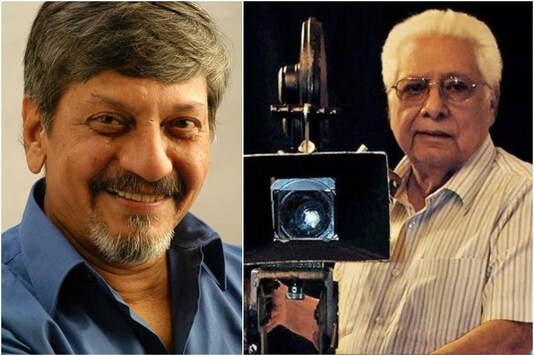
Basu Chatterjee Never Got His Due from Industry: Frequent Collaborator Amol Palekar

Amol Palekar (L), Basu Chatterjee (R)

Amol Palekar (L), Basu Chatterjee (R)

Basu Chatterjee could tell simple stories with much conviction perhaps because he never took himself or his success seriously, said 75-year-old actor Amol Palekar.

  • PTI
  • Last Updated: June 5, 2020, 8:14 AM IST

Filmmaker Basu Chatterjee’s films are relevant even today as they were simple stories told in an assuming manner, says actor Amol Palekar, the star of many of the director’s middle-of-the-road brand of cinema.

Chatterjee’s films are quoted by filmmakers for challenging the theatrics of commercial cinema while being more accessible than parallel films of the era, but Palekar believes the veteran filmmaker was never given due credit by the industry or media.

Chatterjee, one of the pioneers of this gentler style of cinema in the country, breathed his last at his home in Mumbai on Thursday. He was 93.

In an interview with PTI, Palekar, whose partnership with the filmmaker stretched through eight films, remembered Chatterjee’s unmistakable simplicity and contribution to the common man’s cinema.

The duo first worked on “Rajnigandha” in 1974, followed by a string of successes in the form of “Chhoti Si Baat”, “Chitchor” and “Baton Baton Mein”, which cemented Palekar’s position as the everyday man’s hero.

“He kept on making parallel films, without making any commercial compromises and yet made very successful films. He, being one of the pioneers in that, I feel the industry and the media never acknowledged this fact, this contribution of Basu da. I feel really sorry, that what was due to him, was never ever given to him,” the veteran actor said.

Palekar said it’s important to look at the films Chatterjee made with a historical lens.

The rise of Chatterjee’s brand of cinema in the 1970s was parallel to the larger-than-life action dramas of the times. Yet, amid all the blockbuster noise, Chatterjee chose to chronicle quieter stories of life’s ordinariness.

“At that time, on one hand there was this mainstream cinema, where everything was�and still is�larger-than-life. Where you needed and still do, a dramatic story, fast-paced twist-laden narratives, Basu da’s films were devoid of any of this.

“His films had simple stories told in an unassuming manner. Yet, they were so interesting, you simply loved them. His films are still relevant because he talked about common men, ordinary people.”

Chatterjee could tell simple stories with much conviction perhaps because he never took himself or his success seriously, said the 75-year-old actor.

“Basu da was such a lovely, simple human being. One of the greatest qualities I learnt from him was never to be bitter or critically caustic about anything.

“He had this lovely sense of humour. He looked at life with humour, which is such a boon. No matter what the situation, he knew how to smile and laugh. He was enchanting, simple like his films. The best part was that he remained so, despite all the success.”

While his films invoke sweet nostalgia of the simpler times, they also find resonance with the everyday struggles of the common man even today, Palekar said.

“The characters were so real. When you watch a Basu da film, you feel ‘Oh, I know this boy!’ or ‘Yes, this is exactly what my problem was yaar.’ To touch that core, Basu did it so effortlessly and beautifully.”

This type of “Basu Chatterjee guy”, Palekar said, was the kind he would pick from his everyday life. He looked for inspiration not from the prototype on screen, but from people on the streets.

“He didn’t talk of heroes, of Ram, Laxman or the most superior men that heroes are expected to be. Our heroes are supposed to be so larger-than-life that at one stage they become unreal.

“But he never talked about such characters or stories. He looked at lives around him, which one would identify easily.”

For Palekar, the key to their partnership was “simplicity”.

Looking back at their legacy with utmost fondness, the veteran actor said he’s grateful for the movies they made together.

“We did so many films, created so many memories. But we never spoke about his favourite performances of mine. He never said, I never asked,” he added, almost reminiscent of their song “Na Bole Tum, Na Maine Kuch Kaha” from “Baaton Baaton Mein”.

Follow @News18Movies for more


https://pubstack.nw18.com/pubsync/fallback/api/videos/recommended?source=n18english&channels=5d95e6c378c2f2492e2148a2&categories=5d95e6d7340a9e4981b2e109&query=Basu,Chatterjee,Never,Got,His,Due,from,Industry:,Frequent,Collaborator,Amol,Palekar,Amol,Palekar,Basu,Chatterjee,movies,&publish_min=2020-06-03T18:46:58.000Z&publish_max=2020-06-05T18:46:58.000Z&sort_by=date-relevance&order_by=0&limit=2


Source